
Subscribe to our WhatsApp Channel
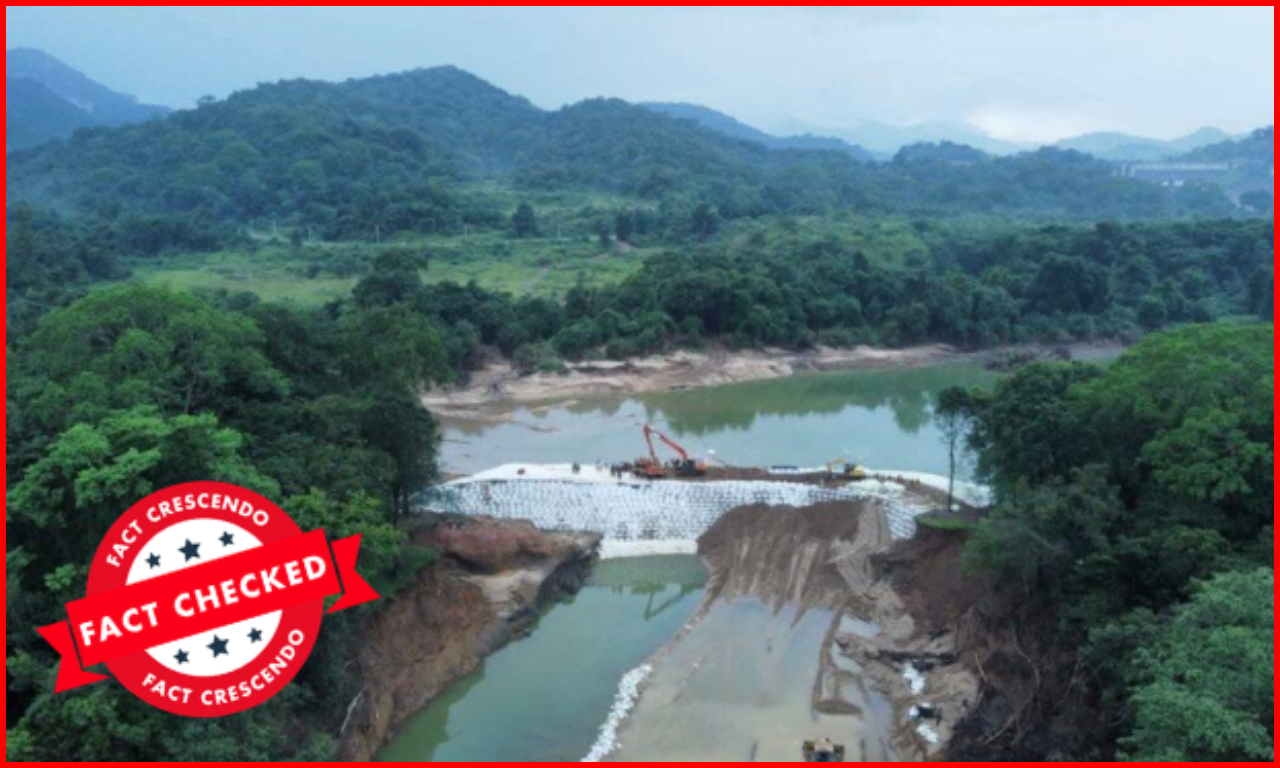
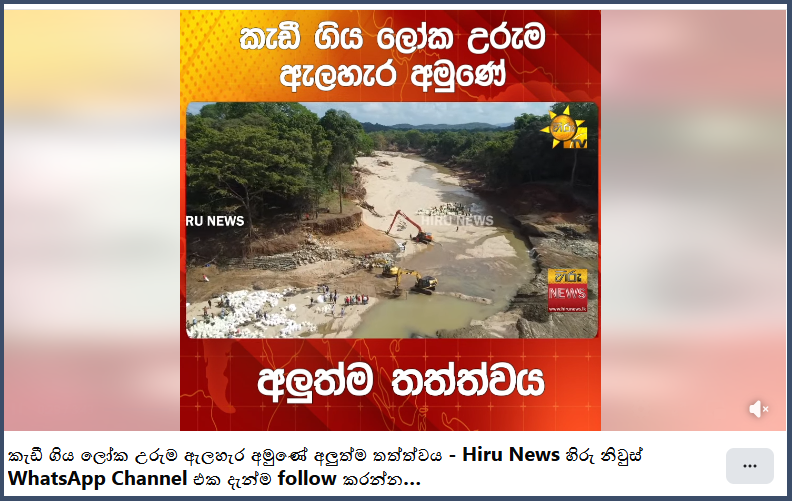
Every Sri Lankan is taught to take pride in the island’s ancient hydraulic civilisation, so it is easy to see why the claim that the Alahera Anicut had joined the ranks of Sri Lanka’s UNESCO World Heritage Sites spread so quickly across social media, newspapers and news websites. The Alahera Anicut, the ancient stone anicut across the Amban Ganga together with its Yoda Ela canal system, was built by King Vasabha in the first century AD and still feeds major reservoirs such as Minneriya, Giritale and Kaudulla today. But is it really a UNESCO World Heritage Site? We investigated. Here is what we found.
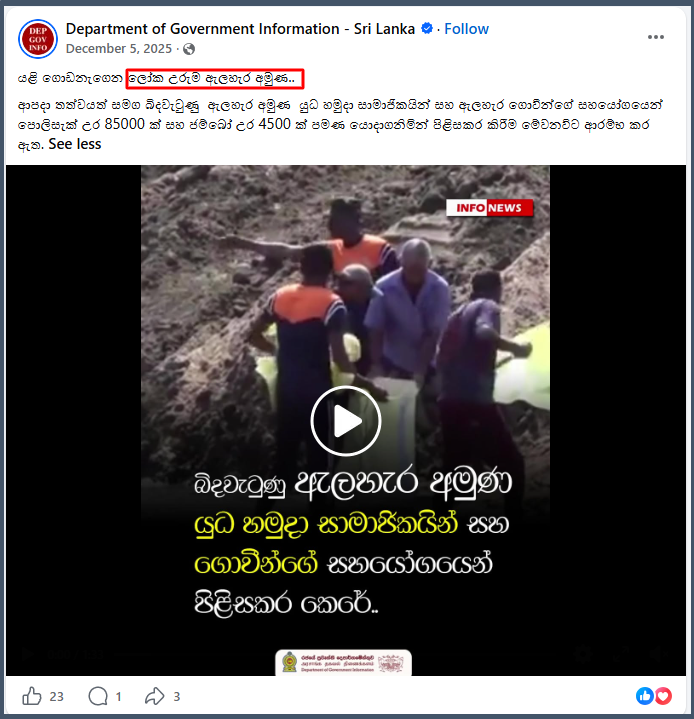
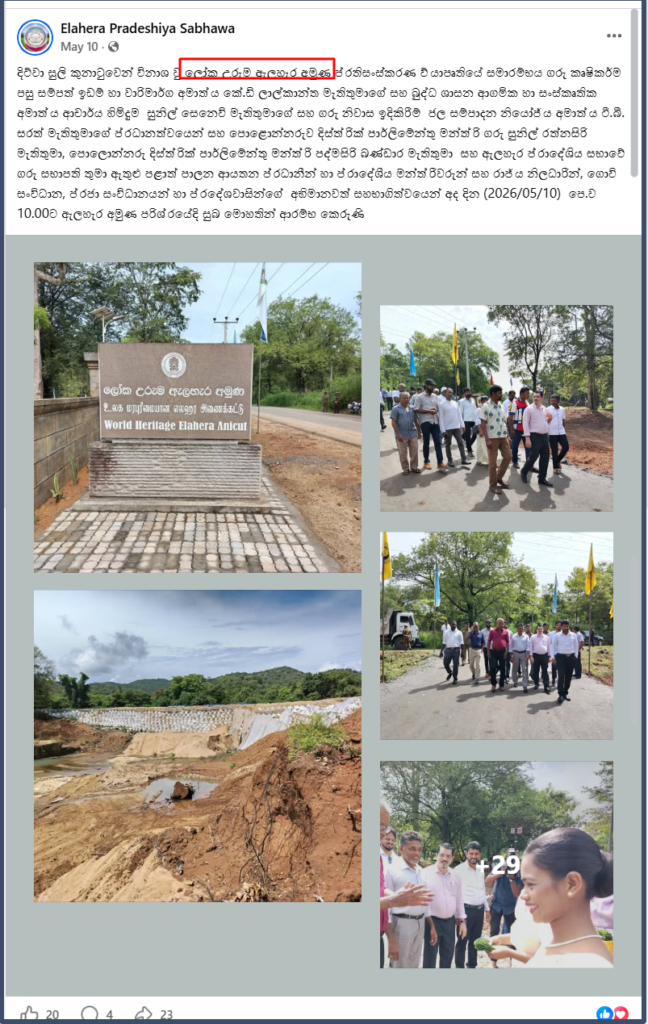
Social Media Posts
Fact Check
The United Nations Educational, Scientific and Cultural Organization (UNESCO) runs the World Heritage concept. A place can only be named a World Heritage Site through the official process set up under the 1972 World Heritage Convention, and only the UNESCO World Heritage Committee has the authority to grant that status.
According to the official list of Sri Lanka’s World Heritage Sites published on the UNESCO World Heritage Centre website, Sri Lanka currently has only eight World Heritage Sites. They are:
- Sacred City of Anuradhapura (1982)
- Ancient City of Polonnaruwa (1982)
- Ancient City of Sigiriya (1982)
- Sacred City of Kandy (1988)
- Sinharaja Forest Reserve (1988)
- Old Town of Galle and its Fortifications (1988)
- Rangiri Dambulla Cave Temple (1991)
- Central Highlands of Sri Lanka (2010)
Our fact-check confirmed that neither the Alahera Anicut nor any related irrigation structure appears on this official list.
UNESCO also maintains a Tentative List of sites that may be considered for future inscription. It holds only five sites from Sri Lanka, and the Alahera Anicut is not among them either. It is therefore clear that the Alahera Anicut is not currently even proposed for inscription on the UNESCO World Heritage List.
So Where Does the “World Heritage” Label Come From?
In 2022, the International Commission on Irrigation and Drainage (ICID) recognised the Alahera Anicut as a World Heritage Irrigation Structure (WHIS). Archived Link
This honour is awarded not by UNESCO but by the International Commission on Irrigation and Drainage. It recognises outstanding irrigation structures that are more than 100 years old and still in operation.
Because the Alahera Anicut was recognised as a World Heritage Irrigation Structure by ICID, and because of its great historical value, it is sometimes mistakenly described on social media and in some newspapers as a “World Heritage Site.”
The recognition was granted during the 69th International Executive Council (IEC) meeting of the ICID, held in Saskatoon, Canada, in 2018. The ICID report states that the anicut was originally built by King Vasabha and later improved by King Aggabodhi and King Vijayabahu, and that it was built across the Amban Ganga, and that it supplies irrigation water to 6,700 hectares of land.
But ICID is not UNESCO. ICID is an international professional body working in irrigation and drainage, and since 2012 it has recognised historic irrigation structures around the world and awarded them a plaque. Although the name it uses is similar to UNESCO’s “World Heritage Sites,” its criteria, selection process, global significance and legal standing are very different from the UNESCO World Heritage List.
ICID invites nominations from its National Committees to select World Heritage Irrigation Structures. These cover both historic structures still in operation and those with documented historical significance. Each year a Task Team evaluates the structures nominated by the various National Committees. The aim of the programme is to give these historic irrigation structures international recognition in a way similar to UNESCO World Heritage Sites. A National Committee may nominate more than one structure, but a separate nomination form must be submitted for each. Affiliated members and non-member countries may nominate structures either through a neighbouring active National Committee or directly to the ICID Central Office.
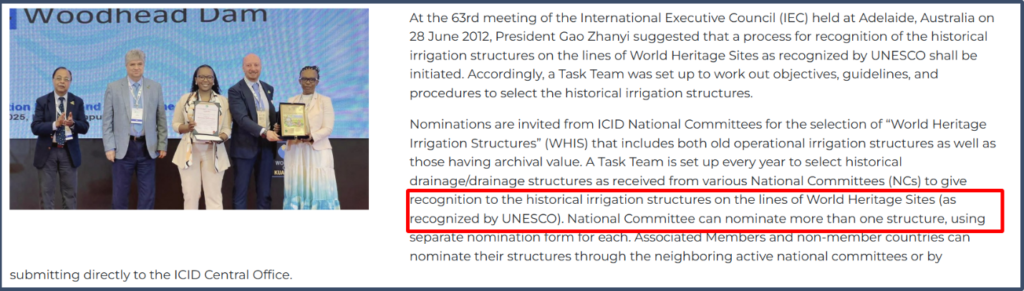
It is therefore clear that ICID set up its award programme “on the lines of World Heritage Sites as recognised by UNESCO,” and not in partnership with UNESCO.
It is true that ICID has officially recognised the Alahera Anicut as one of the world’s important historic irrigation structures. But it is not a UNESCO World Heritage Site. Because only the phrase “World Heritage” is used on social media, many people have wrongly assumed it refers to UNESCO’s well-known list.
Irrigation Department
We also contacted the Alahera Anicut office of the Irrigation Department. A senior official confirmed that ICID had recognised the Alahera Anicut as a World Heritage Irrigation Structure and issued a certificate for it but confirmed that it has not been recognised as a UNESCO World Heritage Site.
Department of Archaeology / Sri Lanka National Commission for UNESCO
We also spoke with Prasanna Ratnayake, Director of the Architectural Conservation Division of the Department of Archaeology and a member of the Sri Lanka National Commission for UNESCO. He too confirmed that the Alahera Anicut has not been designated a UNESCO World Heritage Site. He explained that ICID had recognised it as a World Heritage Irrigation Structure, which is different from UNESCO designation. He added that, on an earlier occasion, the Department of Archaeology had asked the Irrigation Department for references to the Alahera Anicut as a World Heritage Site, and the Irrigation Department had then informed the department about the certificate it received from ICID.
ICID and UNESCO are two completely independent international organisations with no direct institutional relationship. The differences between them, and their indirect links, can be understood as follows.
ICID and UNESCO Are Two Separate Bodies
UNESCO is an official intergovernmental organisation within the United Nations. It designates World Heritage Sites on the basis of international conventions agreed between member states. For more information, click here, here, here and here.
ICID, the International Commission on Irrigation and Drainage, is a non-profit, non-governmental international professional organisation made up of irrigation engineers and experts from around the world. For more information, click here.
The two bodies do sometimes work together to support the global conservation of water management and historic water heritage. At an advisory level, ICID works in technical co-operation with UNESCO’s International Hydrological Programme (UNESCO-IHP), sharing information and collaborating on research into important water resources and historic irrigation technologies. For more information, click here and here. In Sri Lanka, joint committees under the Irrigation Department co-ordinate the activities of both bodies. For more information, click here.
The Two “World Heritage” Lists Are Not the Same
The two lists differ on three counts. Their main purpose differs: UNESCO protects cultural or natural value common to all of humanity, while ICID-WHIS recognises the engineering value of old agricultural and irrigation structures. Their official titles differ: “World Heritage Site” versus “World Heritage Irrigation Structure.” And their Sri Lankan examples differ: Sigiriya, Anuradhapura and Sinharaja for UNESCO; the Alahera Anicut and the ancient Parakrama Samudra sluice (Bisokotuwa) for ICID.
Alahera Anicut
The Alahera Anicut is indeed a historic irrigation structure of great engineering and historical value. It was originally begun by King Vasabha, who ruled from AD 67 to 111, and was later developed into its present form by King Mahasena. It is an important symbol of Sri Lanka’s ancient irrigation civilisation, and environmentalists and historians have often stressed that it should be preserved as a national heritage site. But being nationally important, or having historical value, is different from holding official UNESCO World Heritage status.
Join us to learn more about our fact-check investigations.
Facebook | Twitter | Instagram | Google News | TikTok | YouTube
Conclusion
According to UNESCO’s official records, the Alahera Anicut is not among the eight sites on Sri Lanka’s World Heritage List, nor among the five on the Tentative List proposed for future consideration. The Alahera Anicut is therefore not an official UNESCO World Heritage Site.
However, based on information from the Irrigation Department and the official ICID website, it is true that ICID officially recognised the Alahera Anicut as a World Heritage Irrigation Structure in 2018 and issued a certificate for it. Yet, saying “the Alahera Anicut is a World Heritage” is therefore not completely false. The confusion has arisen because ICID’s recognition as a World Heritage Irrigation Structure, which follows a different standard and scale from UNESCO’s list. has been mistaken for UNESCO World Heritage Site status.

Title: No, the Alahera Anicut Is Not a UNESCO World Heritage Site — Here Is What It Actually Holds
Fact Check By: Pavithra Sandamali
Result: Missing Context