

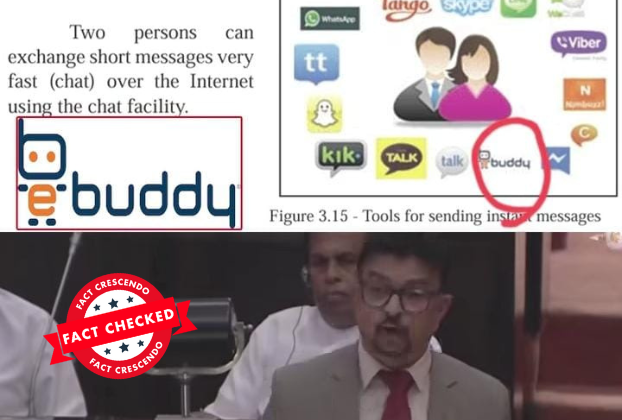
දිනපතා සත්ය කරුණු දැන ගැනීමට අපගේ WhatsApp චැනලයටමෙතනින් එකතුවන්න.
The new education reforms sparked a major controversy when they found a link to an obscene website in the Grade 6 English module. Following this, a statement made by Deputy Minister Mahinda Jayatissa claiming that a similar website name has appeared in Sri Lankan school textbooks since 2015 sparked wide discussion on social media.
Social Media Posts:
A video of a statement made by Deputy Minister Mahinda Jayasinghe in Parliament has been shared on social media, in which he says, “‘Buddy’ has been included since 2015, and Mahinda Jayasinghe brings the textbook and proves it.”

The video was shared on social media, with users expressing both support and opposition to the Deputy Minister’s statement.

Facebook Tiktok Facebook Facebook
To find out whether content related to an obscene website called “Buddy” had actually appeared in Sri Lankan school textbooks since 2015, we carried out a fact check.
Fact Check :
We reviewed Deputy Minister Mahinda Jayasinghe’s full statement in Parliament on 22 January 2026 as part of our investigation. His statement is as follows.
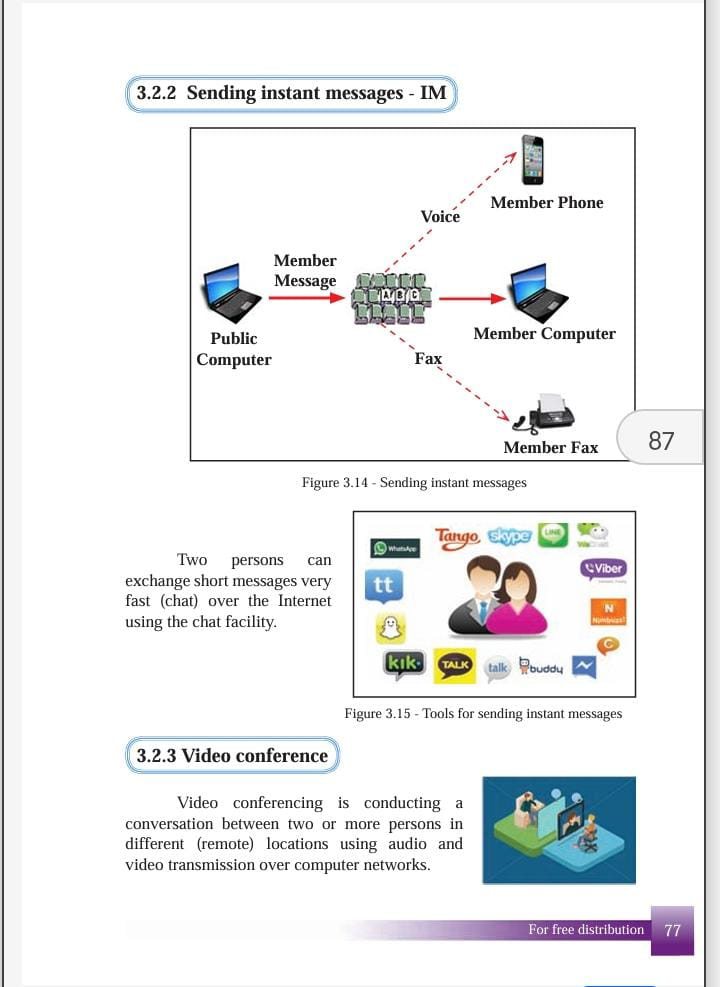
“I can show the Opposition Leader when and where this so-called obscenity began. I have the Grade 11 ICT textbook with me. On page 77, several links are listed. One of them is ‘Buddy’, the same ‘Buddy’ you are calling obscene. If you search for ‘Buddy’ on the internet, everything can be seen.”
Grade 11 ICT Textbook
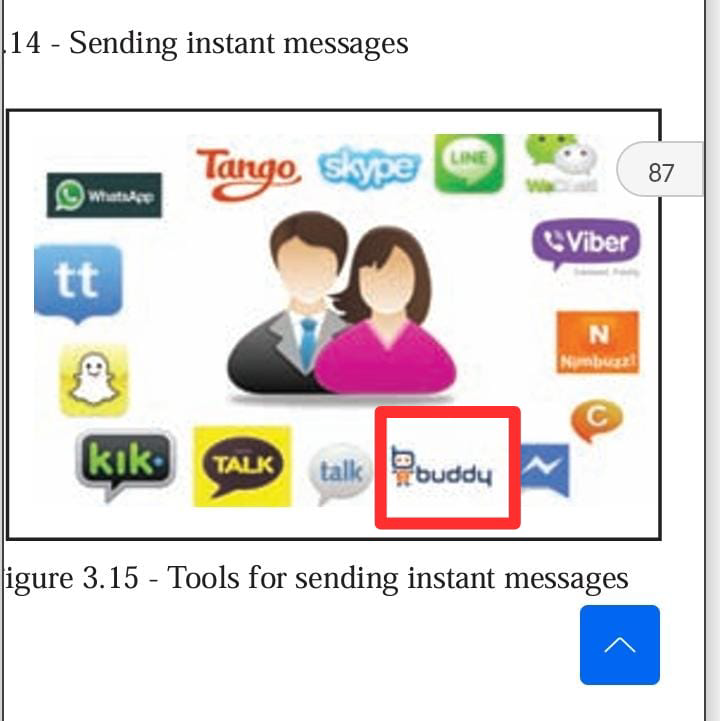
Accordingly, we examined the Grade 11 Information and Communication Technology (ICT) textbook, which was first published in 2015 by the Educational Publications Department. The textbook includes a list of 15 online messaging tools under the heading “Tools for sending instant messages” on page 77. These include Skype, Viber, and WhatsApp. The list also contains the name “eBuddy”, which aggregates online messaging accounts. The Grade 11 ICT textbook can be accessed here.
eBuddy and Buddy.net are two completely different websites!
eBuddy was a web-based and mobile messaging service that began in 2003 and was based in the Netherlands. The service was originally launched under the name e-Messenger and was later renamed eBuddy in 2006.
The main purpose of eBuddy was to allow users to chat with contacts from multiple instant messaging platforms, such as MSN/Windows Live Messenger, Yahoo Messenger, AIM, ICQ, and Google Talk, from a single website.
However, eBuddy operated only for a limited period, and the service was shut down by the end of 2013.
The inclusion of the website Buddy.net in a Grade 6 English module created under the new educational reforms also sparked controversy. Accordingly, we also examined what Buddy.net refers to.
Our review shows that Buddy.net is not a general messaging service but a website that contains adult-only content.
Moreover, it is clear that the term “eBuddy,” which is included in the Grade 11 ICT textbook first published in 2015 by the Educational Publications Department, refers to a different platform than the website Buddy.net found in the Grade 6 English module created under the new education reforms.
The Cabinet has decided to review the Grade 6 education reforms and restart them in 2027.
Accordingly, the National People’s Power government introduced the new education reforms, aiming to bring a major change to the country’s education system. The reforms were scheduled to be implemented for Grades 1 and 6 this year.
However, the reforms faced strong opposition. Critics said expert input was insufficient and discussion time was limited. The situation became even more intense after a web link in the Grade 6 English module caused controversy.
Nevertheless, Minister Dr Nalinda Jayatissa, speaking at a Cabinet media briefing, confirmed that the Grade 1 reforms will go ahead as planned this year.
Join us to learn about our fact-checking investigations.
Facebook | Twitter | Instagram | Google News | TikTok
Conclusion:
Our investigation shows that the eBuddy app included in the Grade 11 ICT textbook, first published in 2015, is not an obscene platform but an online messaging aggregator service. Furthermore, it is completely different from the Buddy.net app, which recently sparked controversy.

Title:Mahinda Jayasinghe’s statement that an obscene website called “Buddy” appeared in a school textbook since 2015 is false.
Fact Check By: Fact Crescendo TeamResult: Misleading