

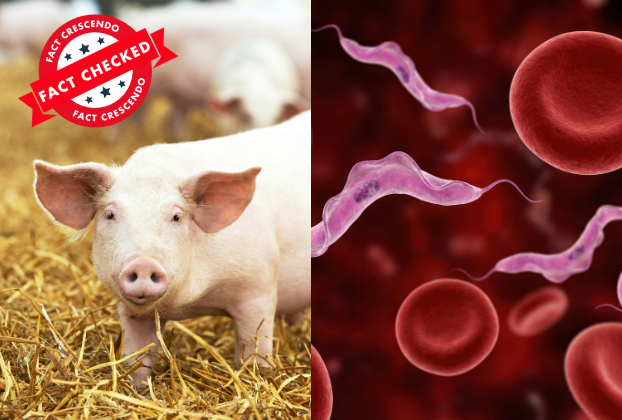
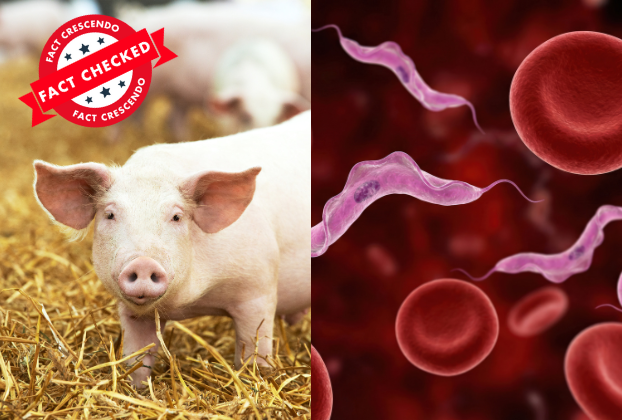
A claim circulating widely on social media platforms warns that pigs carry dangerous parasites that can survive cooking, continue thriving inside the human body, and even lay hundreds of eggs daily after consumption. This claim has gained traction and fear-based engagement. However, our investigation shows that this claim is misleading.
Social Media Posts
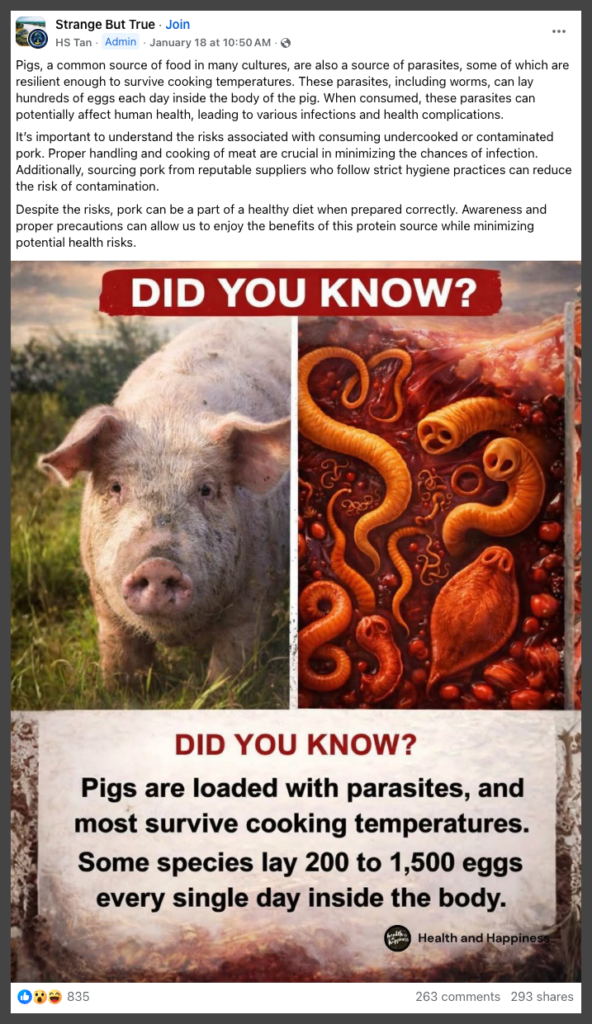
Viral posts typically assert that pork contains parasites that “survive high cooking temperatures,” remain alive inside the body even after meals are cooked, and rapidly multiply by laying hundreds of eggs per day.

Fact Check
Parasites Actually Associated With Pork
Historically, several parasites have been linked to pork consumption, but all are transmitted through raw or undercooked meat, or through poor hygiene and contaminated food or water, not through properly cooked pork. One of the most well-known is Trichinella spiralis, a roundworm that causes trichinosis when live larvae in undercooked pork or wild game are ingested.
Another parasite sometimes cited is Taenia solium, the pork tapeworm. Eating undercooked pork containing viable cysts can cause an intestinal infection known as taeniasis. A more severe condition, cysticercosis, occurs when a person ingests tapeworm eggs, usually through food or water contaminated with human feces, not from cooked pork muscle itself.
Toxoplasma gondii is another organism often mentioned in viral claims. This protozoan parasite can be present in various undercooked meats, including pork, lamb, and beef, and poses particular risks to pregnant people and immunocompromised individuals.
Parasite Egg Production
Some parasites can produce large numbers of eggs once established inside the human body. Taenia solium, the pork tapeworm, provides an example. An adult tapeworm produces eggs when living in a person’s intestines. This occurs after consuming undercooked pork containing live cysts, or after ingesting tapeworm eggs through contaminated food or water. Eating properly cooked pork does not cause this infection.
Scientific studies on tapeworms emphasize that cysticercosis, the most serious form of infection, where larvae invade tissues or the brain, typically happens when a person swallows eggs shed by an infected person, not by eating cooked meat.
(Source: PubMed – Rev Sci Tech, Mayo Clinic, The Conversation)
However, research shows that it is inactivated by adequate cooking, freezing, and safe food handling, and it is not uniquely linked to pork Proper cooking destroys tapeworm cysts in pork muscle before consumption, preventing this infection route altogether. Therefore, while some parasites can produce many eggs after infection, they do not survive correct cooking of pork and then begin reproducing inside the body.
Health Risks of Raw or Undercooked Pork
Consuming raw or undercooked pork does carry real health risks, which is why public-health agencies consistently advise against it. Parasites and bacteria can survive in meat that has not reached safe internal temperatures, leading to gastrointestinal illness and, in some cases, more serious complications.
In parasitic infections such as trichinosis, symptoms may begin with nausea, diarrhea, and abdominal pain, and later progress to fever, muscle aches, swelling, and fatigue as larvae migrate into muscle tissue. Severe cases can involve the heart or lungs. Tapeworm infections may cause digestive symptoms, and cysticercosis can lead to seizures or vision problems if larvae lodge in the brain or eyes.
Beyond parasites, raw or undercooked pork can also harbor bacteria such as Salmonella, E. coli, Listeria, and Yersinia enterocolitica. These pathogens can cause food poisoning with symptoms ranging from vomiting and diarrhea to fever and bloody stools.
(Source: Healthline, Cleveland Clinic, WebMD, Red Table Meats).
Is Pork Uniquely Dangerous?
Pork has historically been associated with trichinosis, but modern farming practices and meat inspection have dramatically reduced this risk in commercially produced pork in many countries. Reviews of pork-associated parasites consistently identify Trichinella, Taenia solium, and Toxoplasma gondii as the main concerns, all of which are controlled by adequate cooking and hygienic handling. Industry and nutrition sources note that commercially produced pork is routinely free of harmful parasites at the point of sale, with risk arising primarily from raw or undercooked meat or from wild and backyard pigs (Source).
Importantly, pork is not unique in this regard. Beef, lamb, and wild game can also carry parasites such as Taenia species or Toxoplasma if undercooked, reinforcing that safe cooking practices matter more than the type of meat.
Safe Cooking Temperatures and Parasite Inactivation
Food-safety authorities provide clear guidance on cooking temperatures that are sufficient to kill parasites associated with pork. Experimental studies show that Trichinella spiralis larvae are inactivated at temperatures around 58°C (137°F), which is below standard consumer cooking temperatures for pork.
Current USDA-aligned recommendations state that whole cuts of pork (such as chops, loin, and roasts) are safe when cooked to a minimum internal temperature of 145°F (63°C), followed by a three-minute rest period, while ground pork and organ meats should be cooked to at least 160°F (71°C). These temperatures are significantly higher than the survival threshold of pork parasites.
At these internal temperatures, parasites such as Trichinella spiralis and tapeworm cysts are destroyed before consumption and cannot survive, develop, or reproduce inside the human body. Claims that pork parasites “survive cooking” typically refer to raw or undercooked meat or to situations where internal temperature is not properly reached or measured, rather than pork prepared according to food-safety standards.
(Source: FoodHandler, The MeatStick, FoodSafety.gov)
Conclusion
The claim that pork parasites survive cooking and continue to thrive in the human body is misleading. While certain parasites can be present in raw or undercooked pork, proper cooking to recommended internal temperatures effectively kills these organisms before consumption. Modern food safety practices, combined with adequate cooking, make properly prepared pork safe to eat.

Title:Do Pork Parasites Survive Cooking and Continue to Thrive in the Human Body?
Fact Check By: Cielito WangResult: Misleading