

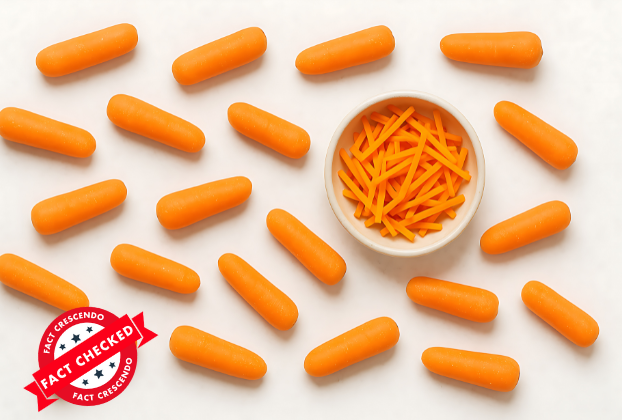
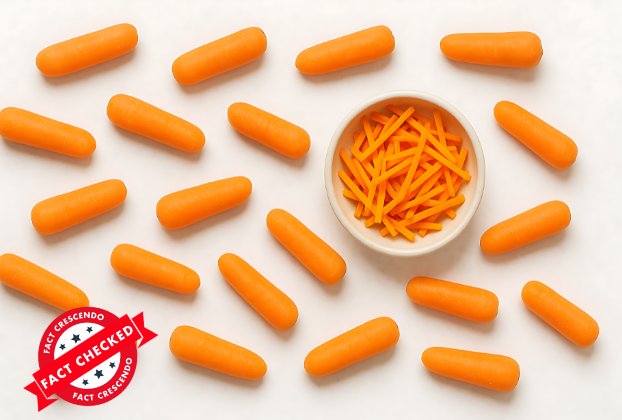
A viral TikTok trend claims eating seven baby carrots before bed helps you fall asleep faster and sleep more deeply. This simple “sleep hack” has gained popularity due to its accessibility and apparent harmlessness. However, scientific evidence and expert commentary do not support this claim.
Social Media Posts
Short-form videos shared widely on TikTok and reposted across social media suggest that consuming approximately seven baby carrots shortly before bed can calm the nervous system and trigger better sleep the same night.
Fact Check
Lack of Direct Scientific Evidence
No controlled clinical trials have demonstrated that eating baby carrots, or any specific quantity of carrots, right before bed improves how quickly you fall asleep, how long you sleep, or your overall sleep quality that same night. Registered dietitians and sleep specialists consistently report that no single food functions as a reliable, immediate sleep aid when consumed just before bedtime. According to analysis by Verywell Health, carrots do not contain significant amounts of melatonin or other sleep-inducing compounds, which means the viral claim lacks clinical support.
Similarly, expert commentary in Fox News notes that claims about vitamin A or potassium “calming the nervous system” oversimplify complex biological processes and are not supported by sleep medicine research.
What Nutrition and Sleep Research Actually Shows
While the viral trend exaggerates the effect, scientific research does show a connection between eating more fruits and vegetables, including carotenoid-rich foods like carrots, and healthier sleep patterns. A large observational study analyzing U.S. National Health and Nutrition Examination Survey (NHANES) data from 2007–2018 found that adults who consumed more carotenoids (such as beta-carotene, alpha-carotene, lutein, and zeaxanthin) in their overall diet were more likely to sleep the recommended 7–8 hours per night. However, this association is based on long-term eating habits, not on eating a specific food right before bed.
A related peer-reviewed analysis found that moderate carotenoid intake was linked to healthier sleep duration, while very low or very high intake was associated with less optimal sleep patterns. This relationship suggests an association rather than a direct cause-and-effect, and it does not prove that eating carrots right before bed will improve your sleep that night.
Broader diet-sleep research also supports this interpretation. Reviews in nutrition and sleep science journals consistently link higher intake of fruits, vegetables, and dietary fiber to better sleep quality and fewer nighttime awakenings over time. These benefits are attributed to overall diet quality, reduced inflammation, and metabolic health rather than to any single food consumed at a specific hour.
Carrots, Fiber, and Blood Sugar Stability
Carrots are nutritionally beneficial and relatively light as an evening snack. Raw carrots have a low glycemic index and provide both soluble and insoluble fiber. According to nutrition databases, baby carrots contain about 2.8 grams of fiber per 100 grams, and a typical serving of seven baby carrots, roughly 85 grams, provides around 2.4 grams of fiber. This fiber slows carbohydrate absorption and helps prevent sharp blood sugar spikes. (Source)
According to WebMD, carrots have a low glycemic load, meaning they release sugar slowly into the bloodstream and are unlikely to cause overnight blood sugar fluctuations in healthy people when eaten in reasonable amounts. This makes carrots a better choice than high-sugar or high-fat snacks, which can trigger acid reflux or blood sugar swings that disrupt sleep. That said, this advantage isn’t unique to carrots—many other light, whole-food snacks offer similar benefits.
It’s worth noting that no research has directly tested how eating carrots right before bed affects sleep quality or blood sugar levels during the night using tools like continuous glucose monitors or sleep laboratory measurements.
Timing of Eating and Sleep Quality
Research on sleep and eating patterns shows that eating too close to bedtime often disrupts sleep rather than helping it. Studies involving large groups of people have found that eating within an hour of going to bed is linked to taking longer to fall asleep, waking up more often during the night, and getting lower-quality sleep overall. For example, one major study found that people who ate less than an hour before bed had a significantly higher chance of experiencing sleep problems.
The Sleep Foundation generally recommend finishing meals at least two hours before bedtime. If a snack is needed, experts advise a small, balanced option eaten earlier in the evening rather than immediately before sleep.
Experts Comment
Associate Professor Dr. Jessada Denduangboripant, a lecturer in the Department of Biology, Faculty of Science, Chulalongkorn University, and a science communicator, told the Fact Crescendo team that experts are largely unconvinced by claims that eating carrots can directly improve sleep. “According to the available evidence, experts emphasize that there is no evidence showing carrots can directly enhance sleep quality. Eating heavy meals close to bedtime may actually interfere with sleep, causing discomfort or indigestion, which is why a light snack may be preferable. Although research has found associations between higher fruit, vegetable, and dietary fiber intake and better sleep, these benefits reflect overall diet quality rather than an immediate effect from eating a nighttime snack. The experts also point out that other foods are more strongly associated with sleep support, particularly those containing tryptophan, magnesium, or compounds involved in melatonin production, such as yogurt, milk, nuts, bananas, and cherries.”
Conclusion
The claim that eating seven baby carrots before bed improves sleep that same night is not supported by scientific evidence. While observational studies show that people who eat more carotenoid-rich foods like carrots as part of their regular diet tend to have better sleep patterns over time, no research demonstrates that consuming carrots immediately before bedtime acts as an effective sleep aid.
Carrots are a nutritious, low-glycemic snack that won’t spike blood sugar, but they offer no special sleep-promoting properties beyond what other light, whole-food snacks provide, and eating any food too close to bedtime may actually disrupt sleep rather than improve it.

Title:Does Eating “7 Baby Carrots Before Bed” Improve Sleep?
Fact Check By: Cielito WangResult: Misleading