
Subscribe to our WhatsApp Channel
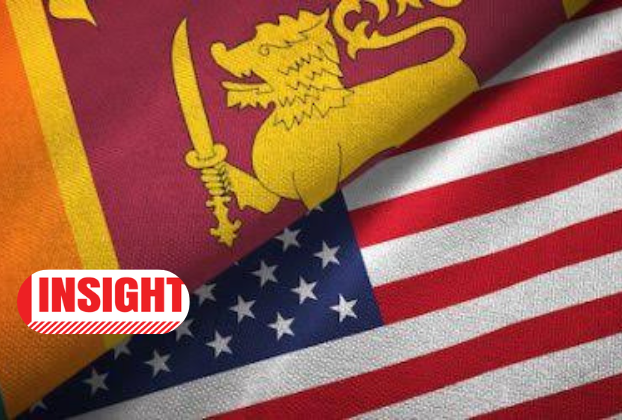
The United States is Sri Lanka’s single biggest export market. So, when news broke that Washington had cut the additional tariff on Sri Lankan goods from a proposed 12.5% to 10%, right after Colombo banned imports made with forced labour, it mattered to a lot of households. What exactly has changed, and what does the 10% figure really mean for exporters? Here is what the numbers actually say.
Social Media Posts:
After the US cut the additional tariff, mainstream and social media carried a range of posts about it:
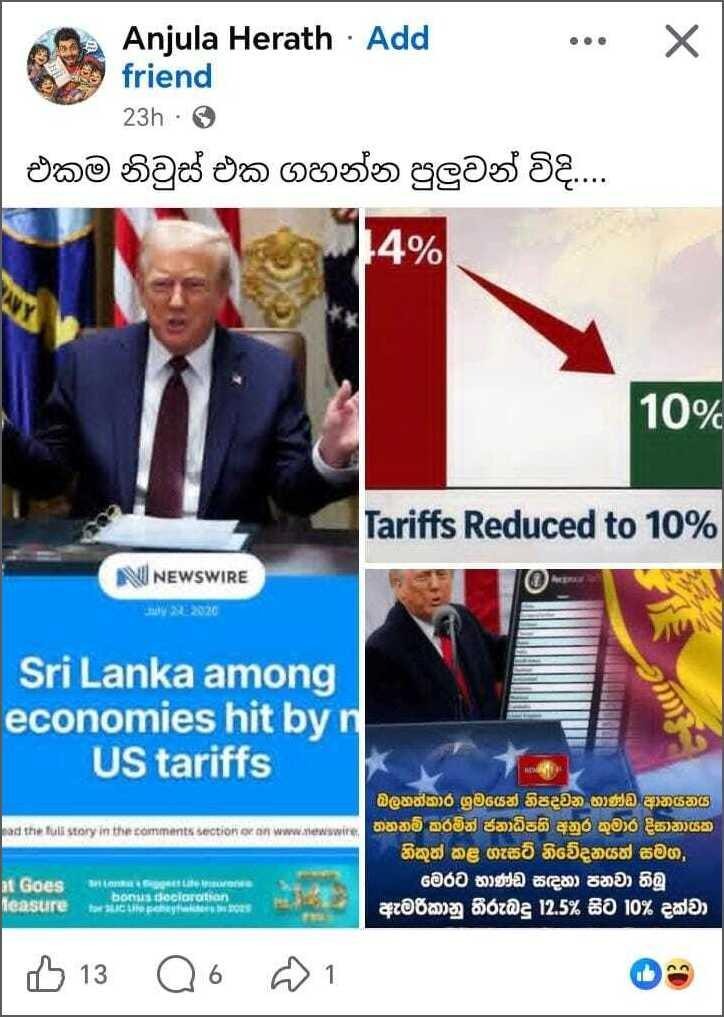
Related posts were also shared like this:

Explainer:
Under Section 301 of the US Trade Act of 1974, an investigation identified 60 economies that had not taken adequate steps to keep out goods made with forced labour. The Office of the US Trade Representative (USTR) examined the policies of those 60 economies, Sri Lanka among them.
What forced labour and forced-labour goods are
Under the International Labour Organization’s Forced Labour Convention No. 29, forced labour is any work or service demanded from a person under threat and without their genuine consent. Forced-labour goods are any raw material or finished product that, at any stage of production, was mined, grown, or made, directly or indirectly, using forced laborers, enslaved workers or child labour. More from the ILOs forced-labour overview and its indicators of forced labour.
What the June 2026 Federal Register notice proposed
The Federal Register notice of June 5, 2026 (91 FR 34272) announced the Section 301 findings on forced-labour goods and the proposed tariffs. It listed Sri Lanka among 60 economies whose domestic laws were deemed inadequate to stop such imports, and on that basis proposed a 12.5% tariff on Sri Lankan goods. See also the USTR final action notice. Importantly, this 12.5% was never actually charged to Sri Lanka; it was only a proposed rate.
What happened after Sri Lanka banned forced-labour imports
To shield exporters from the 12.5% threat, President Anura Kumara Dissanayake, acting as Minister of Finance, Planning and Economic Development, issued a special Gazette notification on July 10, 2026. It immediately banned importing into Sri Lanka any goods produced wholly or partly through forced labour and required importers to give Sri Lanka Customs certification that their goods were made without forced labour (EconomyNext explainer).
Taking that step into account, the US revised its earlier decision, and the USTR moved Sri Lanka into the lowest 10% bracket, a category reserved for the 17 economies that have enacted forced-labour import laws.
This lower rate went to several countries alongside Sri Lanka, including India, Bangladesh, Canada, Mexico, and the United Kingdom, while major markets such as China, Vietnam and the European Union still face the higher 12.5% rate (Daily FT, EconomyNext).
What the 10% tariff now in force actually is
Washington’s aim is to keep at least a 10% additional global tariff on foreign goods, so the policy splits countries into two tiers. From July 24, the 10% additional tariff applies to Sri Lanka and other countries that have banned forced-labour imports, while countries that have not banned them face 12.5%. In short, Sri Lanka escaped the 12.5% rate but still pays the 10% minimum (News.lk, Tamil Guardian).
How this new tariff replaced the earlier temporary one
The US first sought a 44% tariff on Sri Lankan exports, later cut to 20%. On February 20, 2026, the US Supreme Court ruled that the President had exceeded his authority under the International Emergency Economic Powers Act, striking down several major tariffs. In response, the administration used a rarely invoked provision, Section 122 of the Trade Act of 1974, which allows a temporary duty of up to 15% for a maximum of 150 days, to impose a temporary 10% import tariff. Every country, Sri Lanka included, was under that temporary tariff until it expired on Friday, July 24, 2026. From that same day, the new Section 301 anti-forced-labour tariff system took effect worldwide through a White House executive order (TIME explainer).
Which goods are exempt from the new tariff
Under the new US policy, pharmaceuticals, medical devices, and some aerospace and agricultural products are exempt from the additional tariff, and items such as steel and aluminum that already carry other tariffs are spared further increases. But Sri Lanka’s main exports, including apparel and rubber products, and other manufactured goods, do face the 10% additional tariff from July 24, 2026 (EconomyNext).
This 10% is not the whole tax on Sri Lankan exports. It is an extra levy on top of the normal customs duties, which stay the same. With the new 10% added, the total tariff on Sri Lankan apparel rises to around 26.5% on average, while rubber products, which currently face duties of 2% to 5%, move into a 12% to 15% total range (EconomyNext, Daily FT, video explainer).
Economics Professor Wasantha Athukorala
We spoke with Professor Wasantha Athukorala, an economist at the University of Peradeniya, who explained:
“The US first imposed tariffs based on its trade deficits with countries around the world and kept changing them over time. Eventually the courts ruled that the President did not have the authority to run that tariff-raising mechanism, and after that we saw the US pursue other strategies. That is how it came to target countries using forced labour in production, with tariffs of between 10% and 12.5%. Once the plan was announced, several countries, including Sri Lanka, acted to ban imports of forced-labour goods, while some others did not comply. The 12.5% rate was applied to those that did not.
Others were placed under schemes like the 10% rate. One might ask how this affects a country like Sri Lanka. In truth it could work in our favor: if our competitors face 12.5% while we face about 10%, that can make Sri Lankan goods more competitive in the US market. Our main exports are apparel, tea, rubber products, vegetables, and fruit, and those are what this affects, yet some of our competitors in the same products now face the higher 12.5%.
So, it is hard to expect a severe hit to Sri Lanka’s exports to the US, because much of what we send moves under Sri Lankan brands, and demand for those brands is fairly inelastic. When the same tariff is applied uniformly across the world, the disruption to trade tends to be minimal. This is not a scheme targeting one or two countries; it covers around 60. Unless US consumers’ spending or incomes fall sharply, it is difficult to foresee a serious negative impact on our economy.”
Join us to learn more about our fact-check investigations.
Facebook | Twitter | Instagram | Google News | TikTok
Conclusion:
Under Section 301 forced-labour investigation, the US set an additional tariff of 10% for countries that ban forced-labour goods and 12.5% for those that do not. Sri Lanka started in the 12.5% bracket, but that rate was only ever proposed and never charged.
After Sri Lanka banned forced-labour imports by gazette on July 10, 2026, it was moved into the lower 10% bracket, effective from July 24. That 10% is an additional levy on top of existing customs duties, not the total tariff, so apparel now carries roughly 26.5% in total and rubber products 12% to 15%. Economists note the change may even help Sri Lankan exporters, since several competitors remain on the higher 12.5% rate.

Title: How Sri Lanka’s Forced-Labour Import Ban Cut Its US Export Tariff From 12.5% to 10%
Fact Check By: B.P. Hansani
Result: Insight