
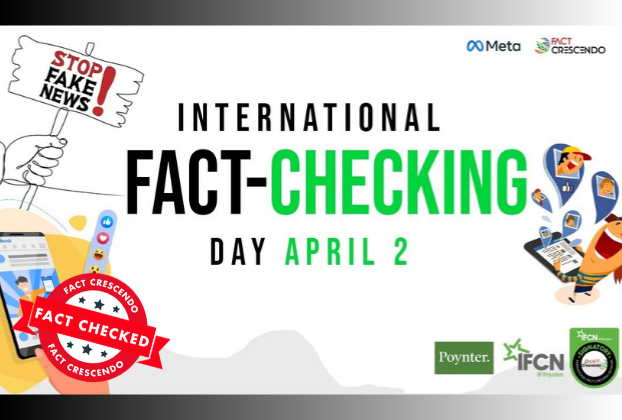
International Fact-Checking Day is observed every year on April 2. This day serves as an important reminder for the public to understand that not everything seen online is true, especially in a time when misinformation is rapidly spreading across digital platforms.
Although a specific day is dedicated to fact-checking, the practice of verifying information should ideally be a daily responsibility for everyone. By doing so, society as a whole can contribute to reducing misinformation.
Notably, the World Economic Forum’s Global Risks Report 2026 ranks misinformation and disinformation as the second most significant short-term global risk. This further highlights the importance of every citizen becoming a fact-checker.
History of International Fact-Checking Day
The International Fact-Checking Network (IFCN) was launched in 2015 by the Poynter Institute, a U.S.-based media training and research organization. Its goal is to connect fact-checking organizations globally and establish common standards for professional fact-checking.
The concept of International Fact-Checking Day was first introduced in 2014 at the London School of Economics and was officially established in 2016. April 2 was chosen as it follows April 1 (April Fool’s Day), a day associated with spreading false information, making it an ideal opportunity to emphasize the importance of truth.
More Than 170 Active Fact-Checking Organizations Worldwide
There are over 170 active fact-checking organizations globally, operating across more than 69 countries, including our organization, Fact Crescendo, which is a member of the IFCN.
Why is International Fact-Checking Day Important?
To Promote Truth and Accuracy
This day highlights the importance of verifying information before sharing it. In a world where misinformation spreads quickly on social media, fact-checking helps ensure that only accurate information is shared.
To Protect People from Harmful Misinformation
Without proper verification, people may believe false information that could harm themselves or others. This day encourages individuals to verify suspicious news before sharing it.
To Build Critical Thinking Skills
Fact-checking encourages individuals to think critically about the information they consume, helping create more informed and responsible readers and audiences.
About the IFCN-Certified Fact Crescendo Team
Fact Crescendo Sri Lanka is a branch of the parent Fact Crescendo organization, which has expanded into several regional countries including Myanmar, Bangladesh, Afghanistan, and Thailand.
The headquarters is based in India, and fact-checking is conducted in multiple Indian languages such as Hindi, Tamil, Malayalam, Bengali, Marathi, Gujarati, Assamese, and Odia.
Our fact-checks are widely recognized for their independence and impartiality. Since 2018, we have been annually certified by the IFCN, adhering to its principles, including transparency, fairness, methodological standards, and non-partisanship.
How We Work
We receive fact-checking requests from users via social media. However, we only investigate claims that can be independently verified. Not all types of information can be fact-checked. Fact-checkers focus on verifiable claims rather than opinions or predictions.
As a third-party fact-checking partner for Facebook, we are authorized to apply ratings such as:
False
Altered
Partly False
Missing Context
Satire
Although content may be rated, there is an appeal process available. However, we do not have the authority to remove or block any Facebook posts, pages, or accounts. Our role is to inform users and limit the spread of misinformation through these ratings.
Our Commitment
Since 2018, Fact Crescendo has been a verified signatory of the IFCN Code of Principles.
We are also certified as a fact-checking organization on WhatsApp. faq.whatsapp.com
Stay Connected With Us
Facebook | Twitter | Instagram | Google News | TikTok | WhatsApp