
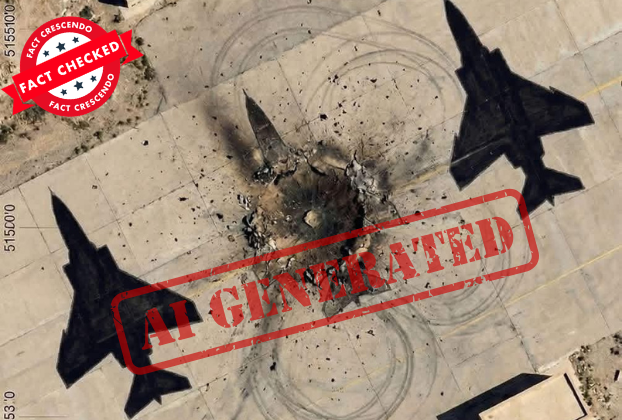
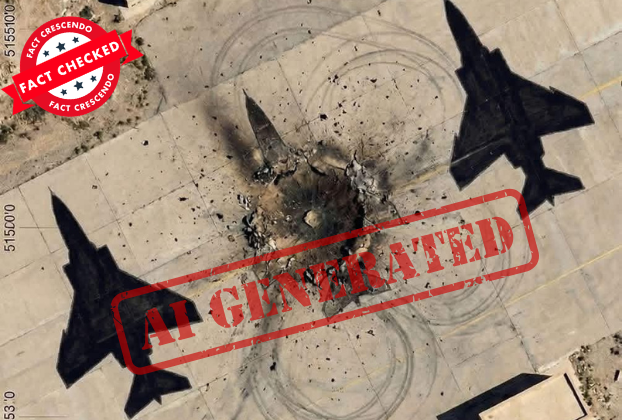
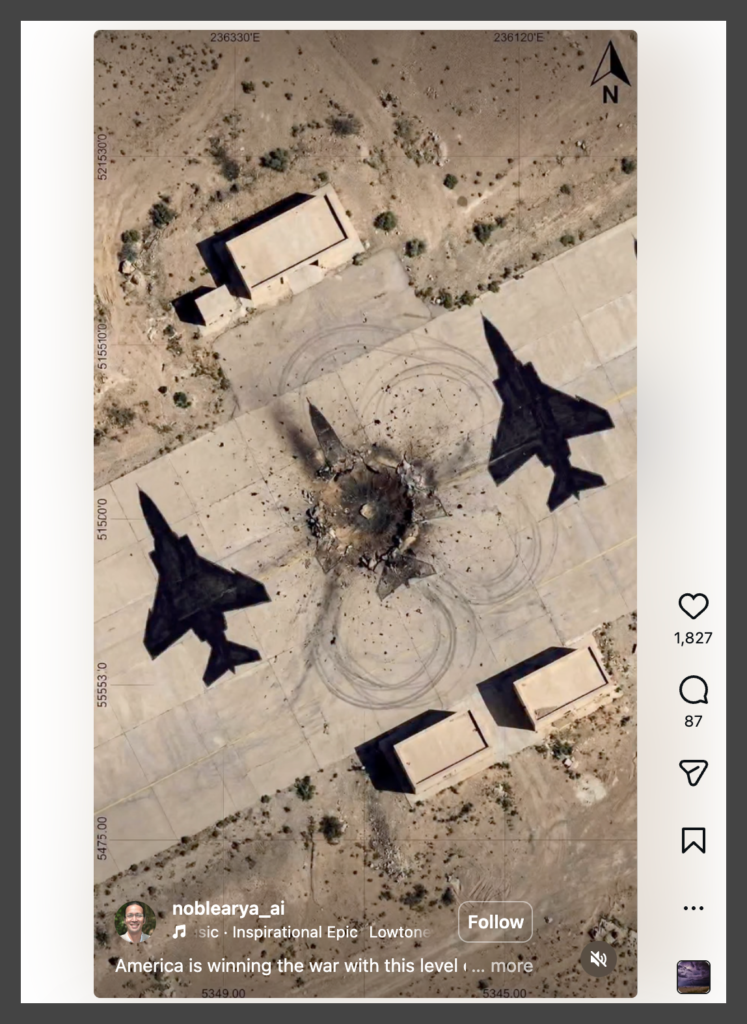
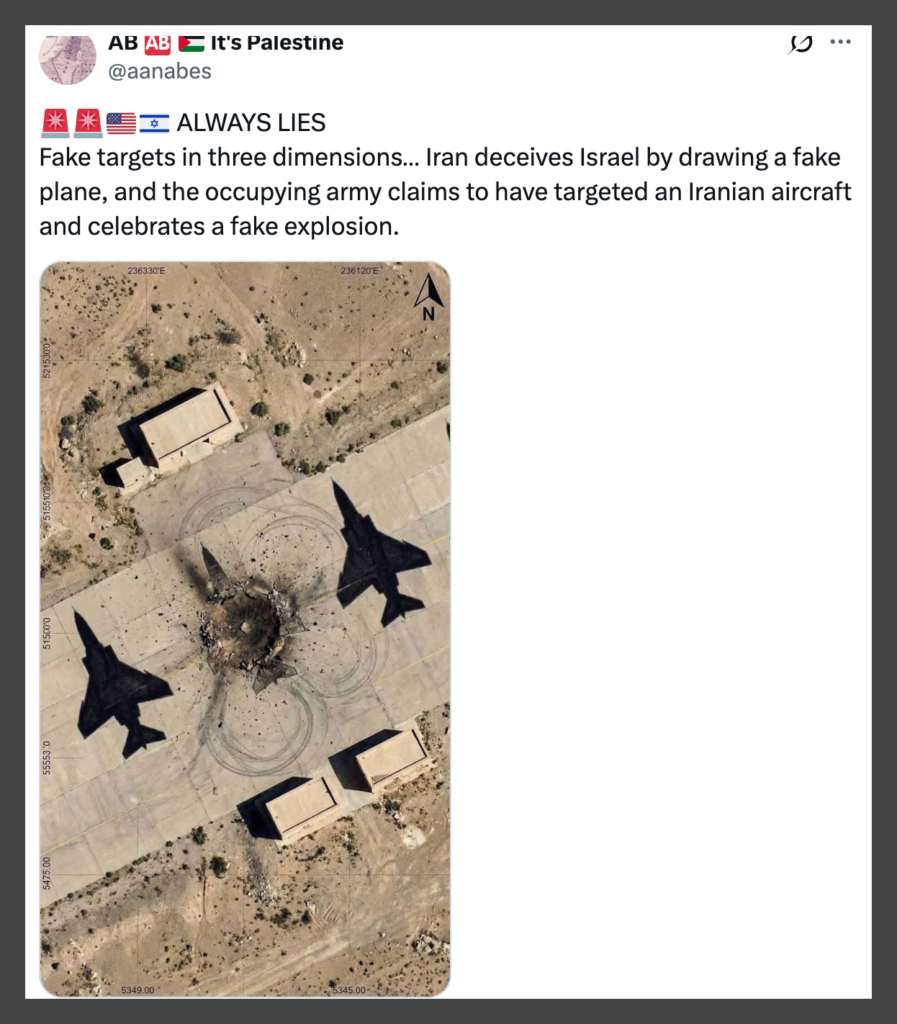
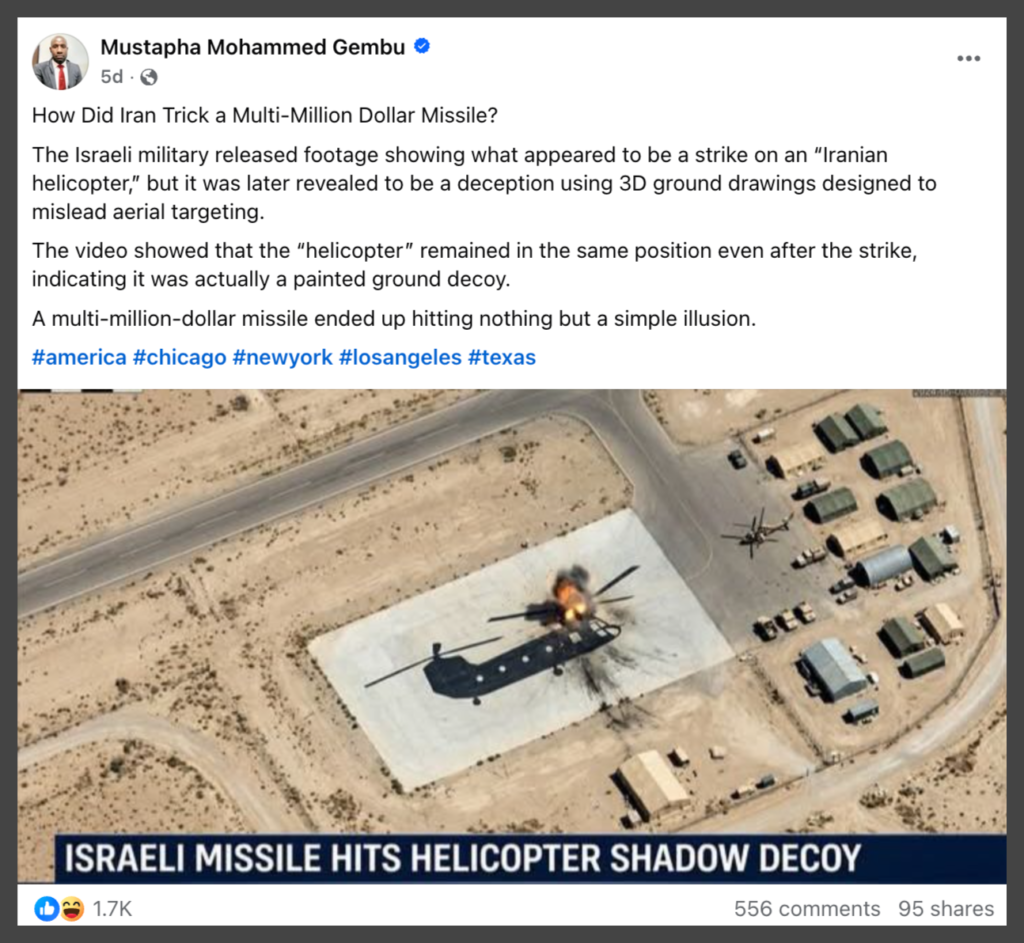
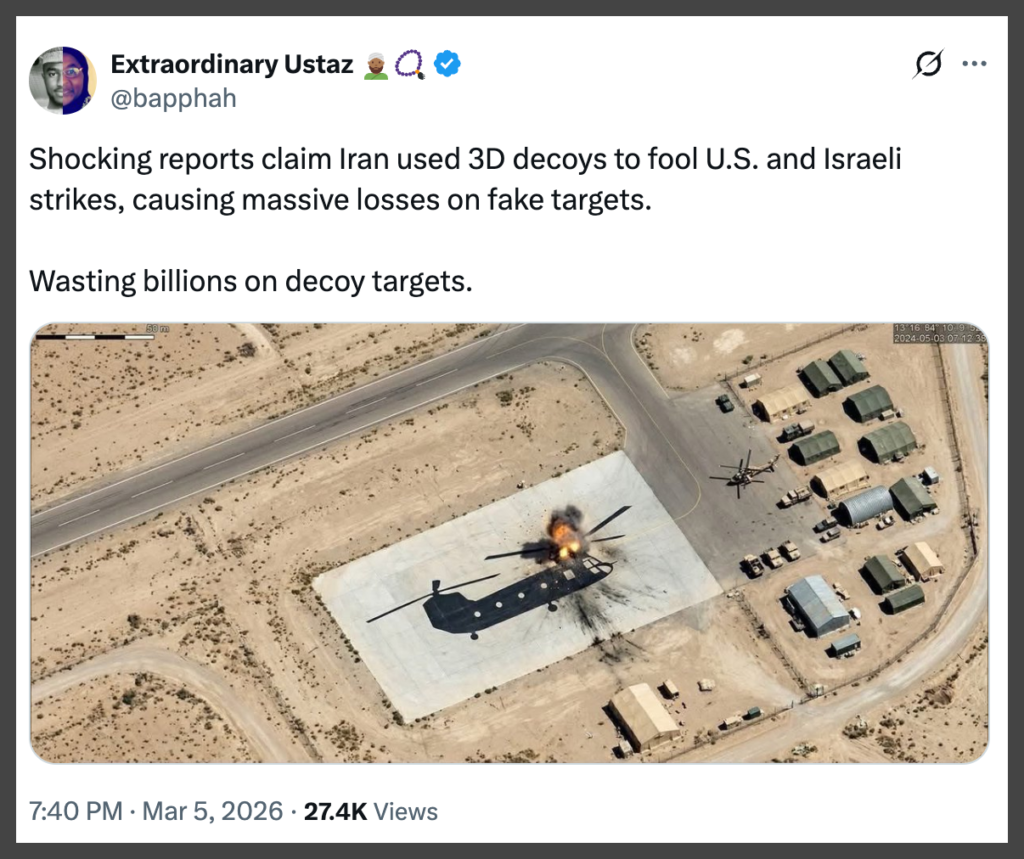
A claim circulating on social media asserts that Iran confirmed a viral satellite-style image showing aircraft silhouettes painted on an airfield as part of a deliberate decoy tactic to mislead U.S. and Israeli airstrikes. However, our review found that the viral images are AI-generated and there is no evidence Iran confirmed the tactic.
Social Media Posts
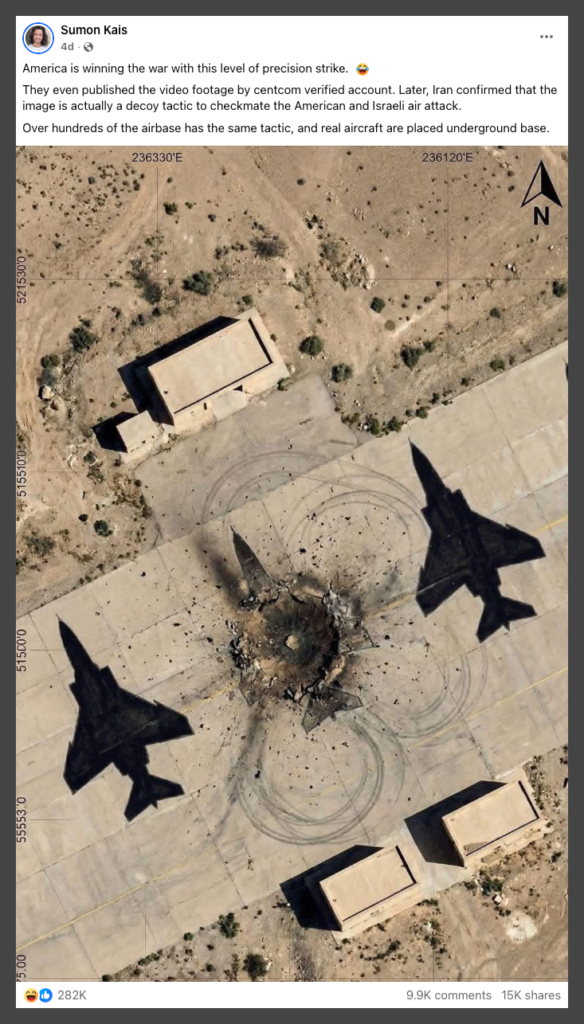
The viral posts show satellite-style images that appear to depict fighter aircraft silhouettes painted on the ground at an Iranian airfield. Captions accompanying the images claim that Iran intentionally painted aircraft shadows or outlines on the runway to trick U.S. and Israeli forces into wasting expensive precision munitions. Some posts further assert that Iranian officials confirmed the tactic as a strategic deception designed to counter Western air superiority.
The images and accompanying claim circulated widely across platforms, including Facebook, Instagram, and X.
Fact-Check
The Viral Image Is AI-Generated
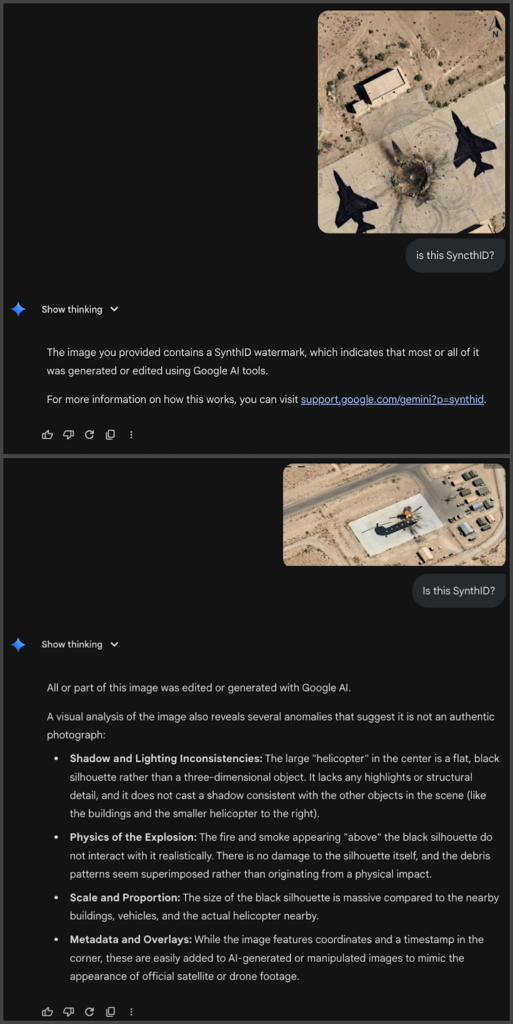
We found that the images were generated using Google’s artificial intelligence tools and contain invisible SynthID digital watermarks, see the results here and here. SynthID is a watermarking system developed by Google DeepMind to identify content created using generative AI. The presence of this watermark indicates that the image was produced artificially rather than captured by satellites or military reconnaissance systems.
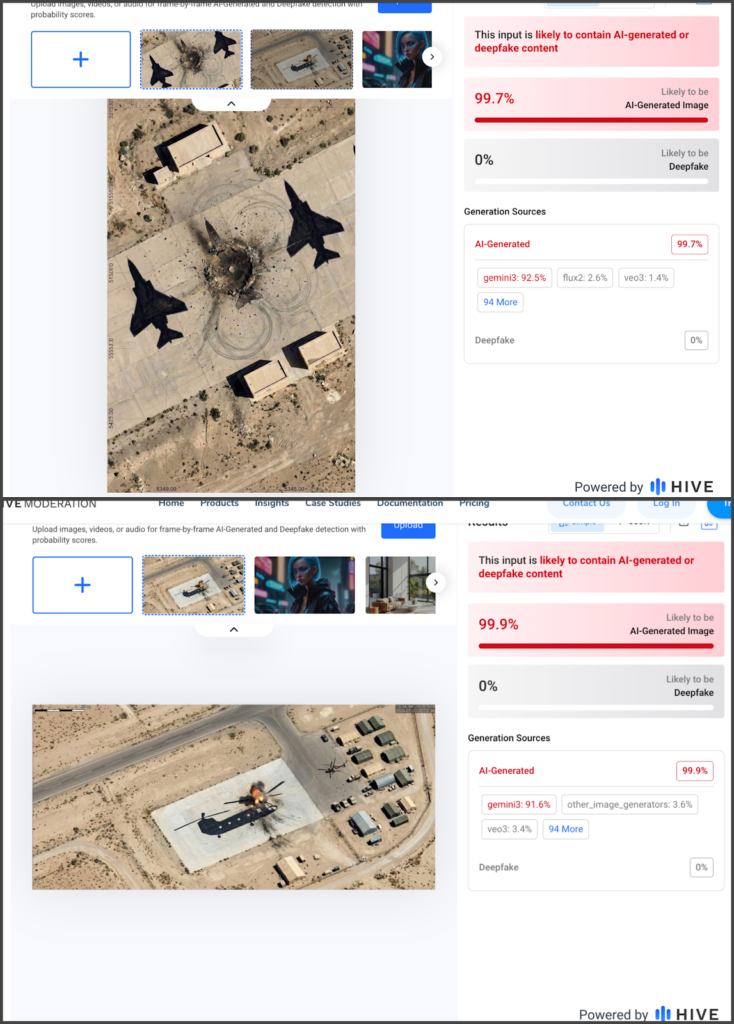
Moreover, we used Hive Moderation, an AI image detector, to further assess these images. The results show 99% probability that both images were created by AI, and over a 90% likelihood that they were generated using Gemini, which corresponds with our findings above.
No Official Confirmation From Iran
We found no confirmation from Iranian government bodies, the military, or Islamic Revolutionary Guard Corps (IRGC) officials.
Available reporting suggests the claim is driven mainly by social media speculation, often citing anonymous posts or analysts rather than official communications.
Iran’s Use of Military Deception Tactics
Although the viral image is fabricated, military deception is a well-established part of Iran’s defense strategy. Analysts say Iran protects missile forces through camouflage, mobility, underground facilities, and decoys, with past reports suggesting some strike “targets” were intentionally staged to misdirect attackers.
Analysts note that Iran’s missile doctrine emphasizes survivability through dispersed launch platforms, mobility, underground facilities, and camouflage designed to complicate surveillance and targeting. These measures can include decoys intended to draw strikes away from operational systems.
(Source: Defence Blog, International Institute for Strategic Studies)
U.S. and Israeli Strikes in Early 2026
In early March 2026, the United States and Israel carried out strikes on Iranian military infrastructure as part of escalating regional tensions. Reports indicate that the operations targeted a mixture of air-defense systems, aircraft, and drone facilities.
According to military reporting, the strikes destroyed several real assets, including components of Iran’s S-300 air-defense systems and aircraft stationed at Iranian bases. (Source)
Disinformation Warfare and AI-Generated Satellite Imagery
The online narrative about Iran allegedly using painted aircraft decoys has circulated alongside other information operations related to the current conflict.
Analysts note that generative AI is increasingly being used to create convincing but inaccurate satellite-style images that can shape public understanding during wartime.
A recent report cited an image shared online that claimed to show destroyed U.S. radar equipment at a military base in Qatar. Researchers later concluded it was an AI-altered version of a 2025 Google Earth image from a different U.S. base in Bahrain.
The episode illustrates how purported “satellite evidence” can spread quickly on social media and be interpreted as confirmation of events that may not have occurred. Experts add that while some actors can assess such claims using independent intelligence sources, these images can still influence online narratives. As a result, AI-generated satellite imagery is increasingly discussed as a factor in misinformation and influence campaigns connected to geopolitical tensions, including discourse related to Iran. (Source: Barron’s, WIRED)
Conclusion
The claim that Iran confirmed viral images showing painted aircraft silhouettes used as a decoy tactic against U.S. and Israeli airstrikes is false.
Our fact-check shows that the viral “satellite” images were generated using artificial intelligence and contain SynthID watermarks identifying them as AI-created content. Additionally, no Iranian government or military authority has confirmed the images or stated that they depict a real decoy operation.
Although Iran has used military deception tactics such as mock missile launchers and other decoys in past conflicts, there is no credible evidence linking those tactics to the viral images circulating online.

Title: Iran Did Not Confirm Painted Aircraft Decoys in Viral “Satellite” Images
Fact Check By: Pranpreeya
Result: False