
As the third phase of excavations at the Chemmani mass grave site in Sri Lanka’s north continues to yield harrowing finds, a wave of viral photographs has been circulating on social media claiming to document the discoveries firsthand. Some of those images, however, have nothing to do with Chemmani at all. Fact Crescendo investigated.
Social Media Claims
Claim 1:
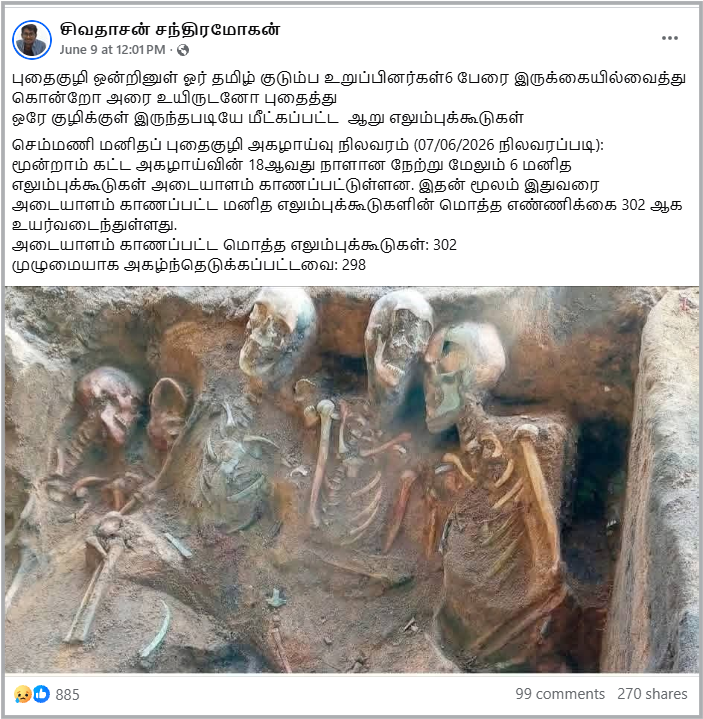
A Facebook post claimed that a photograph showed six Tamil family members who had been killed while seated together and buried in a single pit, and that these were the six skeletons recovered from the Chemmani excavation on 7th June 2026 (the 18th day of Phase 3). The post also stated that the running total of identified skeletal assemblages had reached 302, of which 298 had been fully excavated. The post was uploaded on 9th June 2026.
Claim two
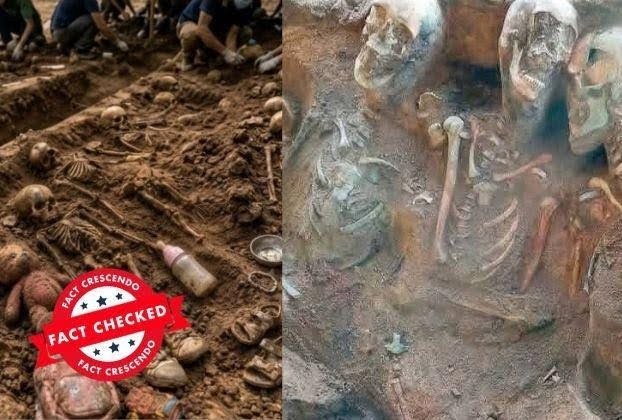
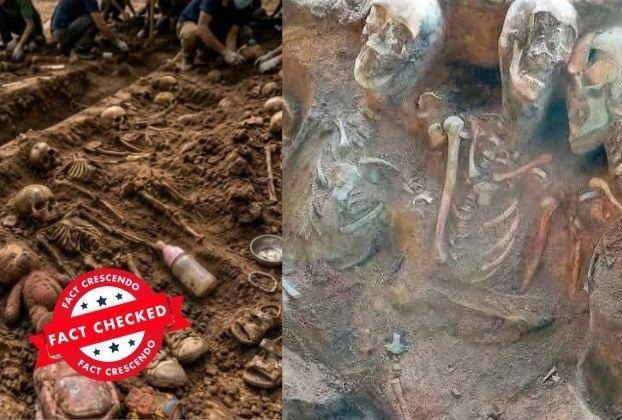
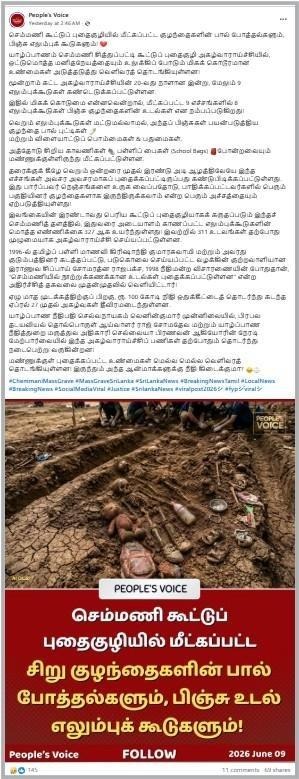
A second Facebook post, archived here, claimed that during excavations on 9th June 2026 (the 20th day of Phase 3), nine skeletal remains were recovered, eight of which were believed to be children’s remains. It is further alleged that children’s milk bottles, toys, dolls, small shoes, and school bags had also been recovered from underground. The post described Chemmani as Sri Lanka’s second largest mass grave site and stated that the running total had reached 327 skeletal assemblages, of which 311 had been fully excavated.
Fact Check
Claim one
The photograph shared in the first post, which purportedly showed six skeletons belonging to Tamil family members killed and buried together in a single pit, was submitted to a reverse image search. It was traced to a CNN news report published in March 2024 that has no connection to Sri Lanka whatsoever.
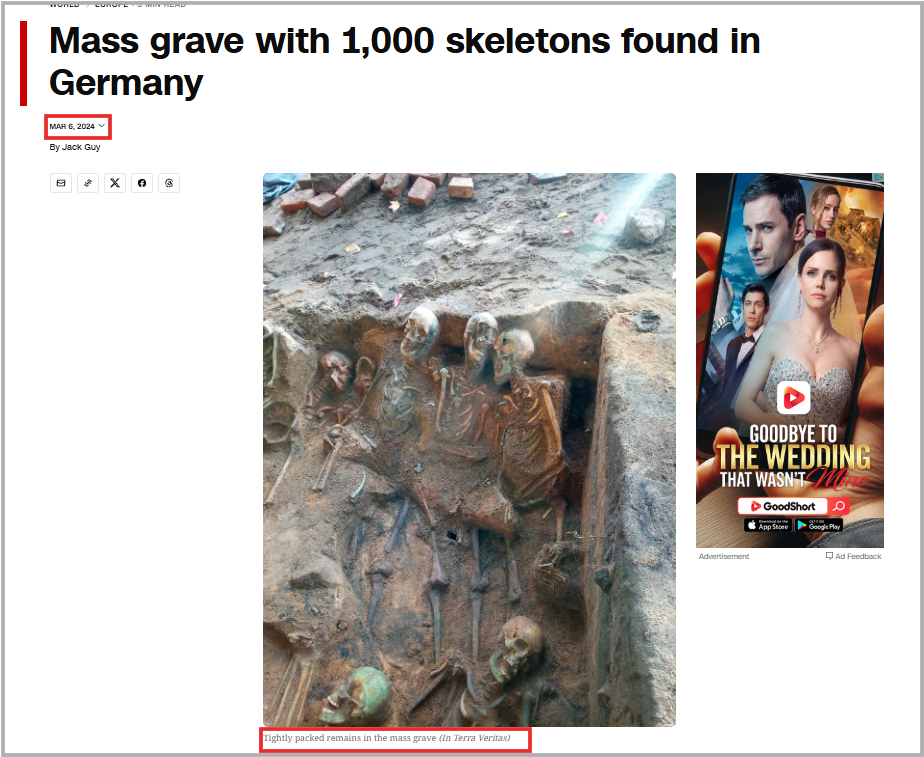
According to that report and corroborating international coverage, the photograph shows a historical mass grave discovered in Nuremberg, Germany. The site was uncovered accidentally in August 2023 during routine archaeological surveys ahead of construction of a retirement home. Carbon dating placed the remains in the early 17th century, specifically 1632 to 1633. Experts determined that the deaths were caused not by war but by a catastrophic plague epidemic during the Thirty Years’ War combined with severe famine. Because thousands perished within a brief period, there was no time for individual Christian burials and bodies were stacked in large communal pits. The site is considered one of the largest historical mass graves ever excavated in Europe.
We also examined media coverage of the actual excavation conducted on 7th June 2026. While outlets did report that six skeletal assemblages were identified that day, no mainstream media source carried any report describing those six skeletons as belonging to Tamil family members killed while seated together. The following reel from that day’s coverage, which includes legal oversight commentary, contains no such claim:
Journalist Kumanan, who regularly covers the Chemmani excavations and publishes verified photographs from the site, clarified on his Facebook page that the circulating photograph was not taken during the Chemmani excavations. He also published the actual photographs from the 7th of June excavation, which bear no resemblance to the viral image.
Regional journalists contacted by Fact Crescendo confirmed that the photograph was entirely fabricated and that no information about six family members killed while seated together had emerged from the excavation at any point.
Claim two
On 9th June 2026, lawyer Ranitha Jnanarajah, who was overseeing the excavations that day, gave a media statement. She confirmed that nine skeletal remains were recovered on 9th June and that the only artefact recovered from one of the skeletal assemblages was a single coin. She made no mention of children’s milk bottles, school bags, toys, or shoes.
Fact Crescendo also reviewed the official updates published by Lanka Files Tamil on X, which provides daily verified updates, photographs, and videos of the Chemmani excavations. Their post from 9th June 2026 confirmed that eight of the nine skeletons recovered that day were those of children and that the running total had reached 327, with 311 fully excavated. No mention was made of milk bottles, school bags, or toys:
We further reviewed journalist Kumanan’s photographs from the 9th of June excavation. None of the photographs shared in the viral post appeared in his verified coverage of that day.
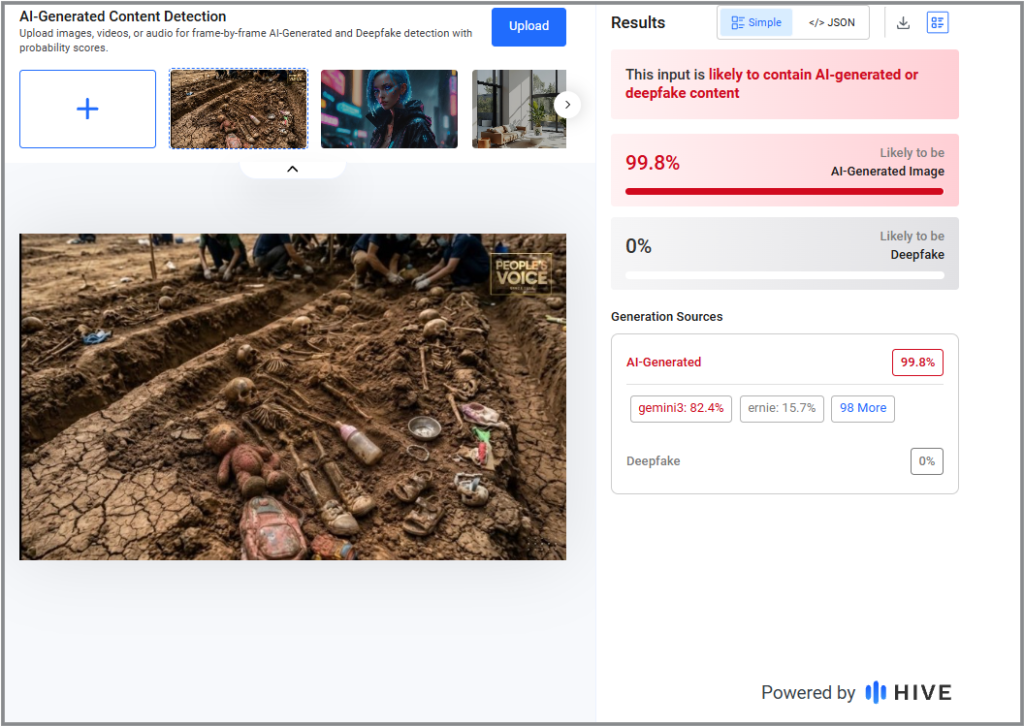
Regional journalists contacted by Fact Crescendo confirmed that while eight of the nine skeletons recovered on 9th June were children’s remains, no milk bottles or school bags were found that day. The only artefact recovered was a single coin. The photograph accompanying the viral post also displayed visible signs of artificial generation, and when submitted to an AI detection tool, it was confirmed to have been created using Artificial Intelligence.
Lawyers Overseeing the Chemmani Excavations
Fact Crescendo attempted to contact the legal supervisors overseeing the excavations for official comment on the circulating claims. Under a court order, they are permitted to speak to media only once every two days, and it was not possible to obtain a statement within the publication window. This report will be updated once they provide comments on their next permitted media day.
Background: The Chemmani Mass Grave Excavations
The excavations at Chemmani began in May 2025 under a court order and proceeded through two phases, concluding in September 2025 with 240 human skeletal assemblages identified. Work was then temporarily suspended due to financial and technical constraints.
Following a government allocation of Rs. Twenty-one million, the third phase officially resumed on 27th April 2026. As of 10th June 2026, the 21st day of Phase 3, a total of 339 skeletal assemblages have been identified across all three phases, of which 318 have been fully recovered.
The third phase is conducted under the supervision of Jaffna Magistrate’s Court Judge S. Leninkumar, with forensic archaeologist Raj Somadewa and Jaffna Judicial Medical Officer Sellaiah Pranavan providing direct technical oversight. All excavation and forensic work are being conducted using rigorous, modern scientific methods.
We found similar misleading and out of context images shared back in 2025 as well, falsely linking to Chemmani mass grave excavations as well and below is one such fact checks conducted in Sinhala.
Follow Us on Social Media
Facebook Page | Twitter | Instagram | Google News | TikTok | YouTube
Conclusion
Our investigation established that neither of the photographs circulating on social media in connection with the Chemmani excavations was authentic. The first image was traced to a CNN report about a 17th-century mass grave in Nuremberg, Germany, and has no connection to Sri Lanka. The second was confirmed to be AI-generated. While it is true that eight of the nine skeletons recovered on 9th June 2026 were children’s remains, no children’s milk bottles or school bags were found that day, a fact confirmed by both regional journalists and the attending lawyer’s official media statement.
The Chemmani mass grave site carries profound historical and human rights significance for Sri Lanka’s Tamil community. In this context, the spread of unverified photographs, images taken from unrelated graves in other countries, and AI-generated fabrications cause serious harm: it creates public confusion, misrepresents the findings of a court-supervised forensic process, and exploits grief for social media engagement. The only reliable sources for development at Chemmani are the forensic experts, judicial medical officers, and official announcements from the Jaffna Magistrate’s Court. The public is strongly urged to wait for final scientific and legal reports rather than sharing emotionally charged or politically motivated misinformation.
In such situations, contact us on our WhatsApp number (+94771514696) to verify the authenticity of similar claims before sharing them.

Title: Are These Photographs of Human Skeletons Recovered During the Chemmani Mass Grave Excavation?
Fact Check By: Fact Crescendo Team
Result: Misleading