
A viral social media post claims that Harvard and the Mayo Clinic published “the most amazing study of the decade,” alleging that a post-workout Dairy Queen Blizzard increases muscle protein synthesis (MPS) by 43% more than “boring chicken breast + rice.” Our review of available scientific evidence shows this claim is false. The wording and tone of the original posts appear exaggerated and meme-like rather than scientific in style.
Social Media Posts
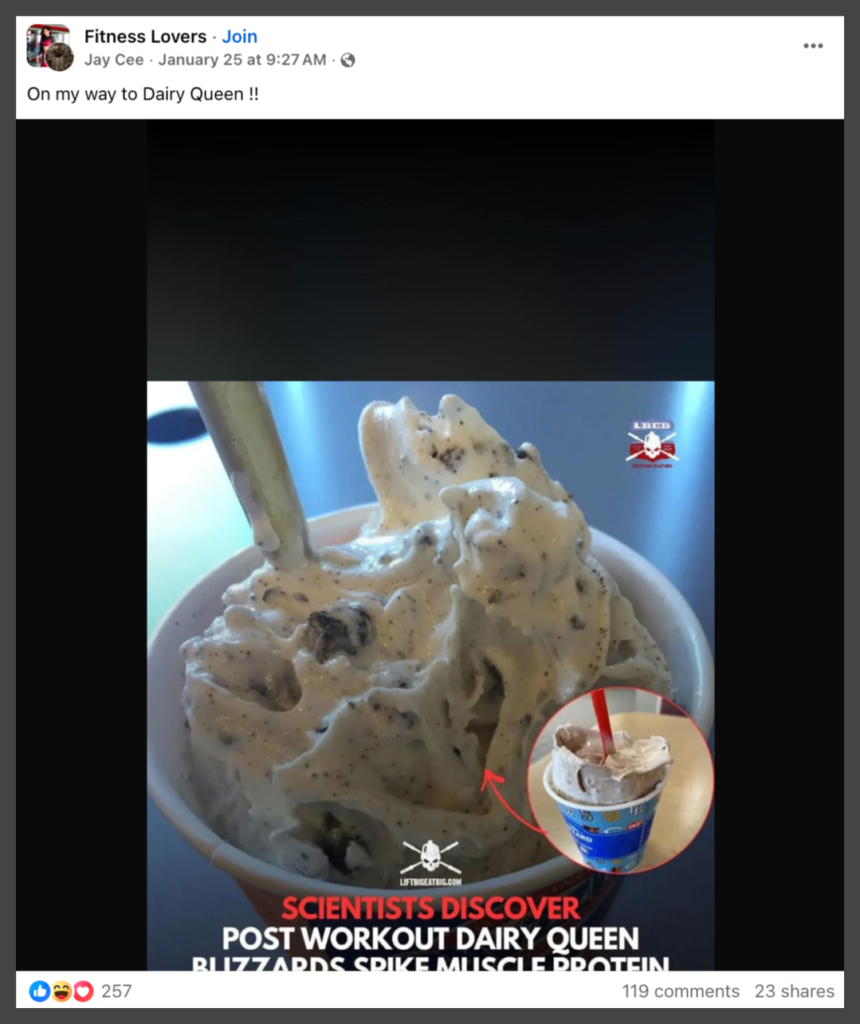
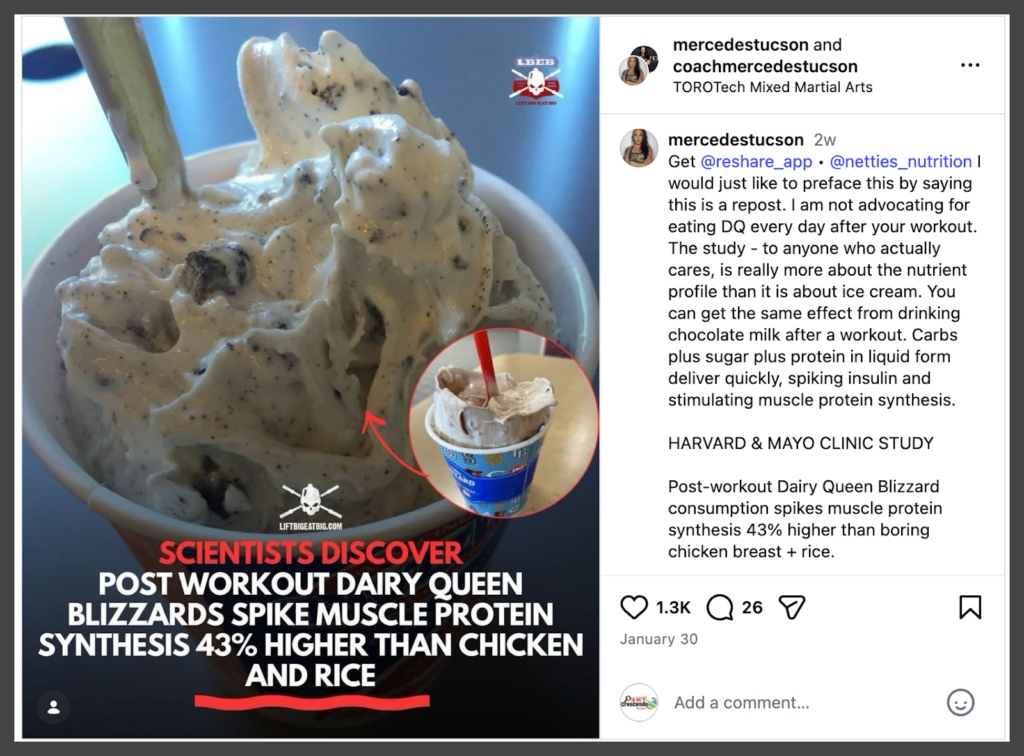
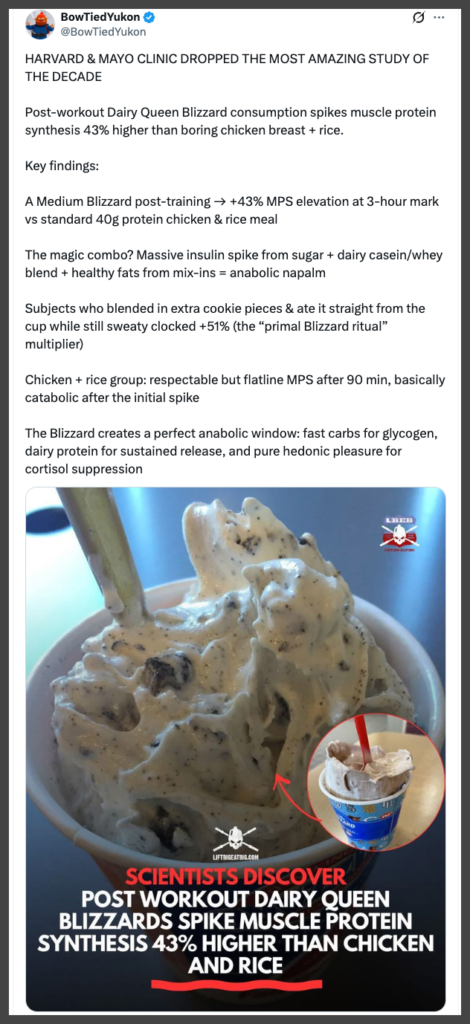
Multiple posts circulating on Facebook, Instagram, and X claim that “HARVARD & MAYO CLINIC DROPPED THE MOST AMAZING STUDY OF THE DECADE,” alleging that consuming a Dairy Queen Blizzard after a workout increases muscle protein synthesis (MPS) by 43%.
Fact Check
Our investigation revealed that the claim originated from the Lift Big Eat Big Facebook page as satirical content. The original post uses language and framing markedly different from legitimate scientific research. Terms like “the most dangerous study of the decade,” “anabolic napalm,” and references to a “primal Blizzard ritual” are never found in peer-reviewed studies.
The hyperbolic tone and casual style indicate the post was meant as humor. However, once shared outside its original context, many people have taken the claim seriously and interpreted it as factual.
No Study From Harvard or Mayo Clinic
A search of scientific databases, including PubMed and PubMed Central, found no peer-reviewed study from Harvard University, the Mayo Clinic, or any joint research team that compared Dairy Queen Blizzards with chicken and rice for muscle protein synthesis.
Studies on muscle protein synthesis after exercise typically test controlled protein supplements or standardized whole-food meals, not brand-name fast-food desserts. For example, a 2020 review in Nutrients on post-exercise protein intake examines specific doses of milk protein, whey, or whole-food proteins, not commercial desserts. Similarly, another review on protein and muscle adaptation emphasizes the importance of protein dose and amino acid composition, not specific brand-name foods.
No controlled clinical trial exists that measures a 43% higher muscle protein synthesis response from a Dairy Queen Blizzard compared with chicken breast and rice.
What the Science Actually Shows About Muscle Protein Synthesis
Muscle protein synthesis refers to the process by which the body repairs and builds muscle tissue following resistance exercise. Scientific consensus indicates that consuming sufficient high-quality protein after exercise stimulates MPS, particularly when the protein contains adequate amounts of essential amino acids and leucine.
A comprehensive 2018 review published in Frontiers in Nutrition concluded that approximately 20 to 40 grams of high-quality protein per meal maximizes post-exercise MPS for most individuals. The review also notes that evenly distributing protein intake across the day is beneficial. The authors emphasize that total daily protein intake, often around 1.6 grams per kilogram of body weight for individuals engaging in resistance training, is more important than precise nutrient timing.
Research also shows that whole-food protein sources such as beef, eggs, dairy, and chicken can effectively stimulate MPS when consumed in sufficient quantities. For example, the same 2018 review reports that approximately 30 grams of protein from beef, eggs, or milk produces similar stimulation of MPS, provided amino acid availability is adequate.
A 2022 study examining cheese and milk protein found that both stimulated muscle protein synthesis equally well at rest and after exercise when sufficient protein was consumed. The study noted that the muscle protein response to whole foods remains largely unexplored. And none of these studies include ice cream desserts as test conditions.
The Role of Carbohydrates and Glycogen
Carbohydrates consumed after exercise help replenish muscle glycogen stores, especially in the first several hours following intense training. Research indicates that consuming approximately 1.0 to 1.2 grams of carbohydrate per kilogram of body weight per hour in the early recovery phase optimizes glycogen resynthesis (Source).
Simple carbohydrates, such as glucose and sucrose, can rapidly replenish glycogen in the first 4 to 8 hours after exercise. A 2020 review on carbohydrate strategies for endurance athletes confirms that high-glycemic carbohydrates promote rapid glycogen restoration.
However, rapid glycogen replenishment does not equal enhanced muscle protein synthesis. Carbohydrates restore energy stores, while protein and essential amino acids drive MPS.
Does Ice Cream Provide Enough Protein?
A Dairy Queen Blizzard is a high-sugar, high-calorie dessert that contains some dairy protein due to its milk base. However, typical servings of ice cream provide relatively small amounts of protein compared with recommended post-workout targets.
In addition to addressing the false claim about muscle growth, it’s useful to examine the nutritional composition of Dairy Queen Blizzard treats. According to Dairy Queen’s nutrition listings and independent nutritional database, Blizzards vary widely by size and flavor but are generally high in calories, carbohydrates, sugar, and fat relative to their protein content. A medium Oreo Blizzard, for example, contains approximately 820 calories, 121 grams of carbohydrates, and about 17 grams of protein, with a large serving containing higher amounts.
Many large Blizzard varieties contain over 1,000 calories and 150 grams of sugar while providing relatively modest amounts of protein compared with typical post-workout recommendations. These nutritional profiles show that while Blizzards provide energy and some dairy-derived protein, their macronutrient composition differs significantly from foods commonly recommended in post-exercise nutrition research.
While a medium Blizzard may provide around 15-17 grams of protein due to its large serving size, this still falls short of the 20-40 grams of high-quality protein commonly recommended to maximize post-exercise muscle protein synthesis.
While pairing carbohydrates with protein can support recovery, there are no peer-reviewed randomized controlled trials testing desserts such as Dairy Queen Blizzards as post-exercise interventions for MPS.
Experts Comments
Medical and sports nutrition professionals similarly caution against viewing high-sugar desserts as optimal recovery foods.
Vinita Bagul, assistant head of sports sciences at the International Sports Sciences & Technology (ISST) in Pune, explains to the Indian Express that while sugars in desserts can contribute to quick glycogen restoration, they lack the essential nutrients (especially protein and fiber) needed for muscle recovery after a workout. Bagul warns that fat in desserts also slows digestion, potentially hindering nutrient absorption during the post-exercise recovery phase, something that matters for optimal adaptation after training. She recommends instead foods that combine carbs and protein, such as a smoothie with protein powder, if the goal is proper recovery rather than just glycogen refill.
Perri Halperin, MS, RD, CDN, clinical nutrition coordinator at Mount Sinai Health System, explains that sugary foods are generally not ideal after exercise because they don’t provide the nutrients muscles need to repair and may promote inflammation. In her expert overview of post-workout nutrition, Halperin points out that an effective recovery meal should include carbohydrates to restore energy, protein to support muscle repair, and fluids with electrolytes to rehydrate, this combination works together to maximize muscle protein synthesis and overall recovery. (Source)
In sports nutrition tips from Registered Dietitian Andrea Holwegner, the post-workout meal should include adequate carbohydrate to replace energy and protein to repair and rebuild muscle tissues. She notes that failing to include sufficient protein per meal can lead to poor muscle repair and even immune dysfunction, underlining that protein is essential to recovery and not just indulgent sugars (Source).
Similarly, Healthline notes that while simple sugars can refill glycogen stores, they should ideally be consumed as part of a balanced carbohydrate-plus-protein approach, not as a standalone high-sugar dessert. A meal combining high quality protein and carbs within a few hours of exercise best supports recovery, stimulating muscle protein synthesis and enhancing performance.
Conclusion
The viral claim appears to stem from satire rather than scientific reporting, and there is no credible evidence supporting the stated 43% increase in muscle protein synthesis. No such study exists in peer-reviewed scientific literature. While carbohydrates from desserts can help restore glycogen after exercise, they do not provide the adequate protein (typically 20-40 grams) needed to maximize muscle protein synthesis, and no research supports using brand-name ice cream desserts as superior post-workout nutrition compared to lean protein and whole grains.

Title:DEBUNKED: Harvard and Mayo Clinic Did Not Find That a Dairy Queen Blizzard Boosts Muscle Growth 43% More Than Chicken and Rice
Fact Check By: Cielito WangResult: Satire