

Subscribe to our WhatsApp Channel
Social media platforms increasingly spread public health information, but not all of it is accurate. Sharing unverified claims can create unnecessary alarm among the public. Below is a fact-check we conducted on one such false claim.
Social Media Posts:
“Disturbing news from Ratnapura! Please pay attention to this information for the safety of your children. ‘Meningitis’ (brain fever) is reportedly spreading among schoolchildren in Ratnapura these days. According to health authorities, although the situation is currently reported only from Ratnapura, parents across Sri Lanka need to be aware of it.”
An AI-generated video carrying the above message was widely circulated on social media as seen below.
The video was also widely shared through WhatsApp as well.
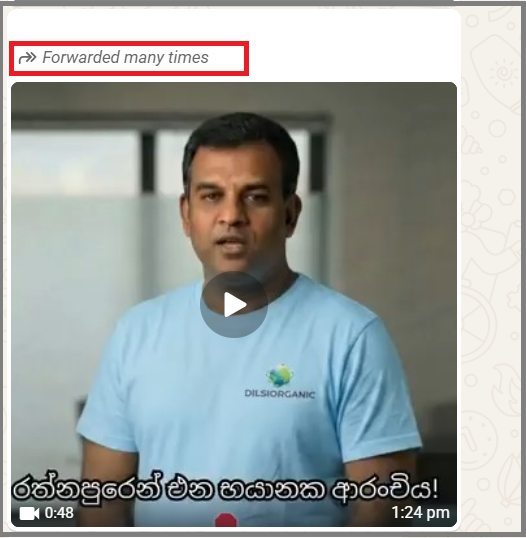
Following several requests to verify whether “brain fever” was actually spreading in the Ratnapura area, we conducted a fact-check into the claim.
Fact-Check:
Encephalitis and meningitis, commonly referred to as “brain fever” in general usage, are serious medical conditions caused by infections affecting the brain or the protective membranes surrounding the brain. These diseases are mainly classified based on the type of microorganism causing the infection and the body’s reaction to it.
We first examined whether mainstream media outlets had reported any unusual increase or outbreak of “brain fever” cases among children in the Ratnapura area. However, we were unable to find any such reports.
In the first week of May 2026, a suspected outbreak of viral meningitis (“brain fever”) was reported among schoolchildren in the Deniyaya area of the Matara District, drawing significant public attention. Around 47 children received treatment at the Deniyaya Base Hospital. To control the spread of the illness, education authorities temporarily closed several schools in the Deniyaya area. Health officials suspected that contaminated drinking water transmitted the virus. This situation was widely reported in mainstream media, and coverage can be found here and here.
Ratnapura Teaching Hospital & Health Officials from the region
However, the Ratnapura District has historically recorded periodic cases of “brain fever” such as Japanese encephalitis. Given this context, we contacted the Director of the Ratnapura Teaching Hospital. Dr. Aruna stated that there had been no reports of a meningitis outbreak or any unusual increase in paediatric cases similar to the situation in Deniyaya. He noted that only occasional cases of Japanese encephalitis and meningitis were treated at the hospital each year as part of routine admissions and that these were not indicative of any current outbreak linked to the Deniyaya situation. He added that health authorities continue to monitor the situation closely.
The Regional Epidemiology Unit, which monitors infectious disease trends in the area, also confirmed that there had been no significant increase in encephalitis or meningitis cases at the hospital or in the surrounding region, including among schoolchildren. This was further confirmed by the local Public Health Inspector, who stated that no abnormal rise in such cases had been observed.
While there is currently no outbreak of “brain fever” in the Ratnapura District, health authorities do regularly issue warnings about diseases that can affect the brain.
The Ratnapura District reports the highest number of rat fever cases and related deaths in Sri Lanka. In severe cases, rat fever can affect the brain and its surrounding membranes, leading to meningitis that can be life-threatening.
Standing water in gem-mining pits in the Ratnapura area can contribute to mosquito breeding, while the presence of pig-rearing farms is also considered a risk factor for certain infections and environmental conditions that may increase the risk of “brain fever” in the region. As a result, the Japanese Encephalitis (JE) vaccine has been made compulsory for children under the age of 10. Further information is available here, here, and here.
Steps to protect children
Always provide children with boiled and cooled, clean drinking water.
Advise children not to share water bottles or food at school or tuition classes.
If a child develops a high fever, severe headache, vomiting, or difficulty moving the neck, seek immediate medical attention at the nearest government hospital without delay. More information is available here.
The video below features Paediatric Respiratory Specialist Dr. Channa De Silva of Lady Ridgeway Hospital explaining the situation reported in Deniyaya and the key symptoms of meningitis.
Join us to learn more about our fact-checking investigations.
Facebook | Twitter | Instagram | Google News | TikTok | Youtube
Conclusion :
Our investigation confirms that the video circulating on social media, claiming that meningitis is spreading among schoolchildren in the Ratnapura area, is false. The Director of the Ratnapura Teaching Hospital, along with the Regional Epidemiology Unit and Public Health Inspectors, confirmed that there had been no significant increase in “brain fever” (encephalitis or meningitis) cases at the hospital or in the surrounding region.
They stated that only one or two isolated cases had been treated since the beginning of the year, which is considered normal. Health authorities clarified that there was no outbreak among schoolchildren and no evidence of a viral spread similar to the situation reported in Deniyaya.

Title: The Claim That a Type of “Brain Fever” Is Currently Spreading Among Schoolchildren in the Ratnapura Area Is False!
Fact Check By: Pavithra Sandamali
Result: False