
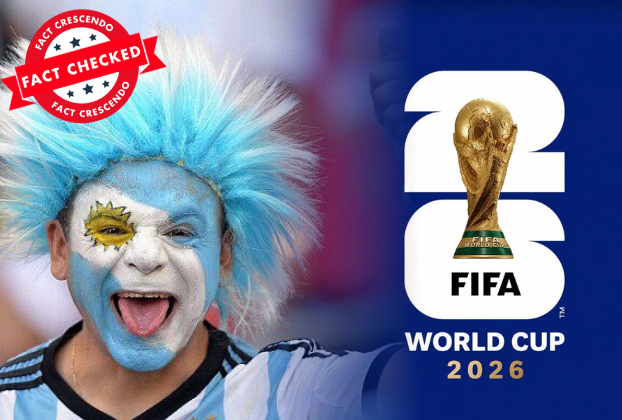
As excitement builds around the 2026 FIFA World Cup in the United States, Canada, and Mexico, social media users have been sharing claims that FIFA has banned face paint from stadiums.
The claim appears to have gained traction after FIFA released updated stadium regulations and a list of prohibited items for spectators. However, our review of FIFA’s stadium rules and multiple reports from reputable media outlets found that the claim is false. FIFA has not banned face paint at the 2026 World Cup. In fact, the governing body explicitly clarified that body paint is permitted.
Social Media Posts
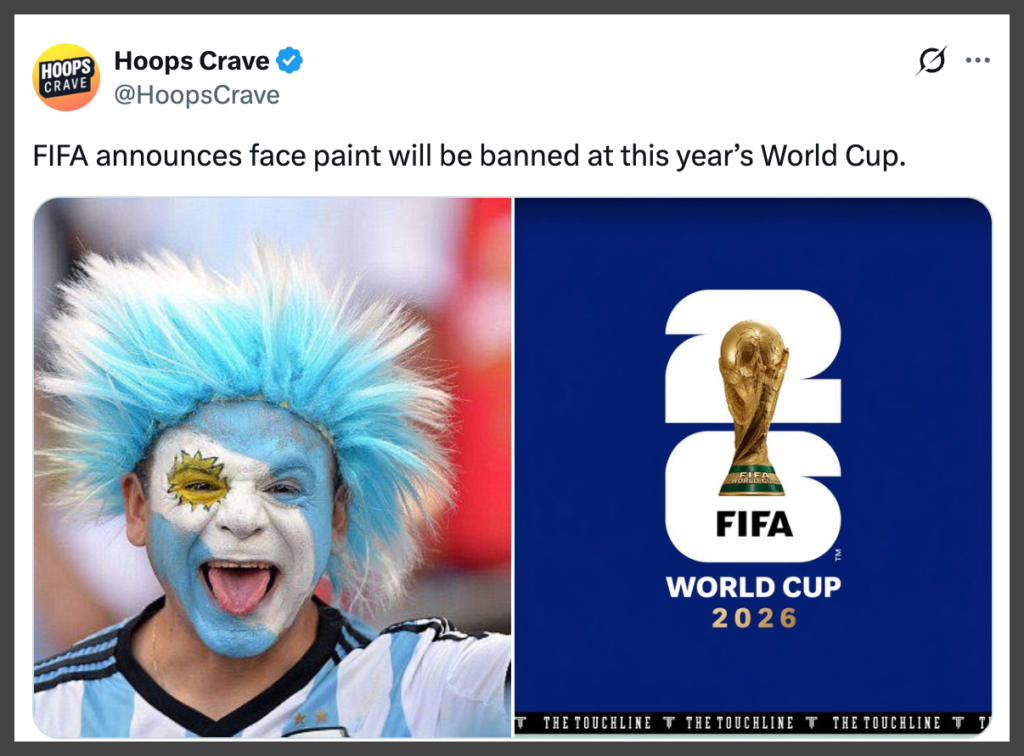
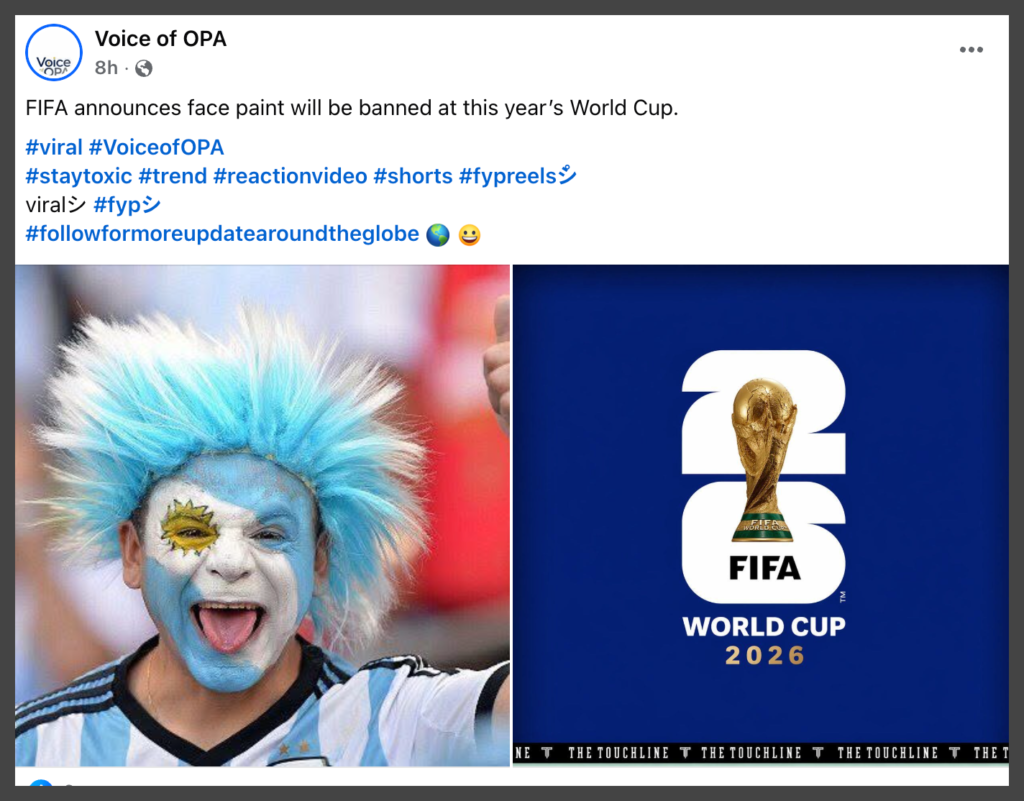
The viral claim typically states that “FIFA announces face paint will be banned at this year’s World Cup” or includes face paint among a list of newly prohibited items.
Fact Check
FIFA Explicitly Says Body Paint Is Allowed
The most important fact missing from the viral claim is that FIFA’s own stadium code specifically clarifies that body paint is not prohibited.
Multiple reports reviewing FIFA’s official World Cup stadium code quoted the same language. According to a report by Yahoo Sports, FIFA’s stadium code further states, “For the avoidance of doubt, body tattoos and body paint do not constitute clothing.” This clarification was included as part of FIFA’s spectator regulations for the tournament.
Reuters likewise reported that FIFA’s code specifies that body paint and tattoos do not count as clothing, while separately prohibiting streaking or exposing intimate body parts inside stadiums. The rule is therefore aimed at preventing public nudity, not banning painted supporters.
These reports demonstrate that FIFA did not introduce a ban on face paint. Instead, FIFA specifically addressed body paint in order to clarify how stadium dress rules should be interpreted.
The Real Restriction: Bringing Paint Into the Stadium
The confusion appears to stem from another section of FIFA’s prohibited-items policy.
While spectators may enter stadiums with face paint already applied, FIFA prohibits fans from bringing certain materials into venues, including spray cans, flammable substances, paint, and large markers.
Several reports reviewing the prohibited-items list noted that paint containers are banned because they are treated as potentially hazardous materials.
For example, Newsweek‘s review of FIFA’s spectator regulations notes that prohibited items include spray cans and various hazardous substances.
Fans who arrive with face paint already applied are permitted to enter the stadium. However, those attempting to bring paint supplies, spray paint, or aerosol containers into the venue may be denied entry, as these specific materials are included on the list of prohibited items.
Face Paint Is Different From Face Coverings
Another source of confusion involves FIFA’s rules on face coverings.
The World Cup stadium code prohibits helmets, masks, and other items designed to conceal a person’s identity. The regulation contains exceptions for medical masks and religious or cultural headwear.
These restrictions apply to objects that physically cover the face and make identification difficult. Face paint does not conceal identity in the same manner and is not included under these restrictions. Therefore, FIFA’s ban on certain face coverings should not be interpreted as a ban on face painting.
Evidence That Face Paint Remains Part of World Cup Fan Culture
Host-city planning documents continue to describe face paint as a normal part of fan celebrations.
The Kansas City FIFA World Cup 2026 Community Playbook, for example, tells residents to expect “flags, jerseys, face paint, music, and spontaneous gatherings” during the tournament. This language would be highly unlikely if FIFA intended to prohibit face paint at tournament venues.
Historically, face paint has long been a common feature of international football tournaments, with supporters using national colors to show support for their teams. FIFA’s current regulations do not indicate any departure from that tradition.
What FIFA Actually Banned This Year
The most notable new spectator restriction announced ahead of the 2026 World Cup concerns vuvuzelas and other loud noise-making devices.
Reuters reported that FIFA has prohibited vuvuzelas, whistles, air horns, and similar devices at all tournament venues. FIFA’s broader prohibited-items list also includes weapons, fireworks, flares, drones, laser pointers, certain oversized bags, face-concealing masks, and hazardous materials. None of the official lists identify face paint itself as a banned item.
Conclusion
The claim that FIFA has banned face paint at the 2026 World Cup is false. FIFA’s stadium code explicitly states that body paint and tattoos do not constitute clothing, meaning supporters may enter stadiums with face paint already applied. The confusion appears to stem from separate rules prohibiting spectators from bringing paint, spray cans, and other hazardous materials into venues, as well as restrictions on face coverings that conceal identity. Neither rule amounts to a ban on face paint itself.

Title: No, FIFA Has Not Banned Face Paint at the 2026 World Cup
Fact Check By: Pranpreeya
Result: False