
Throughout 2025, misinformation spread rapidly across digital platforms, affecting health, consumer products, and technology. This recap documents the year’s most significant viral falsehoods, from fabricated celebrity news and AI-generated videos to misleading health claims and false product warnings. As content becomes more sophisticated, understanding and identifying misinformation has become essential for navigating our digital information landscape.
January
In early January 2025, shortly after the Korean series “Squid Game” Season 2’s release, social media posts went viral claiming that “Squid Game” was inspired by actual events, specifically, a 1986 incident in South Korea where hostages were allegedly forced to participate in deadly games. However, we found the claim is false. While the series draws inspiration from real social issues like inequality, competition, and desperation, the plot is entirely fictional and emerged from director Hwang Dong-hyuk’s creative vision. Moreover, the viral images purporting to show “real-life Squid Game locations” were created using AI.
During the ongoing Los Angeles wildfires, a viral image circulated showing a lone house standing unburned amid the surrounding destruction. The image was shared with claims that it captured the aftermath of these wildfires. However, the image was actually generated by Google AI and does not depict a real event.
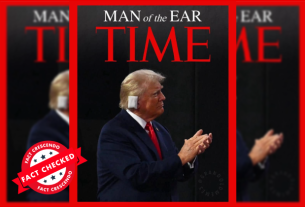
Later in January, as TikTok faced a potential ban over U.S. national security concerns unless owner ByteDance sold the app, a claim spread widely on social media alleging that Donald Trump had already purchased it. Our investigation found this claim false. The accompanying photo circulating online was misleading. As of publication, Donald Trump has not bought TikTok. However, on January 20, 2025, President Trump signed an executive order granting TikTok a 75-day extension to operate in the U.S., despite legal restrictions tied to its Chinese ownership.
February
In South Asia, including countries like India and Sri Lanka, a claim circulated that drug dealers are selling colored and flavored crystal methamphetamine called “Strawberry Quik” to children. We found that this viral message is false and based on a fabricated rumor.
AI-related claims also gained significant attention in February. One such claim suggested that Barron Trump, son of President Donald Trump, performed on America’s Got Talent and stunned viewers. The video of Barron Trump supposedly singing spread across multiple platforms, leading many people to believe he had competed in the popular talent show.
March
Rumors circulated online claiming that Will Smith, the celebrated Hollywood star known for The Fresh Prince of Bel-Air, Men in Black, and Bad Boys, had died in a car accident. These rumors, accompanied by doctored images, spread rapidly across social media platforms. We found that this was a hoax designed to generate link clicks.
Another viral claim linked mRNA COVID-19 vaccines to cancer, stating that the FDA admitted a connection between Pfizer and Moderna’s vaccines and cancer. This claim lacks sufficient evidence. The FDA has not issued any public statement admitting that mRNA vaccines cause cancer, and research shows that claims linking Pfizer and Moderna’s mRNA COVID-19 vaccines to cancer are false.
April
In early April 2025, social media posts claimed that Disney had paused its live-action remake of “Tangled” and cast actress Cynthia Erivo as Rapunzel. Disney has faced widespread criticism over casting choices in live-action adaptations of animated films, and Erivo’s star has been rising. Our investigation revealed that Disney did pause its Tangled live-action project. However, the claim about Cynthia Erivo being cast as Rapunzel is false.
After Pope Francis’s death on April 21, 2025, claims and rumors about his legacy spread on social media. A video clip showing an elderly cardinal being carried to a spiritual event was widely shared, claiming it depicted Pope Francis’s final moments before his death. Our investigation found this claim to be false. The video actually shows Catholicos-Patriarch of All Georgia Ilia II at a spiritual event held at the Patriarchal Cathedral of the Holy Trinity on January 19, 2022.
May
As COVID-19 resurges, old myths about the disease have resurfaced, myths that were debunked years ago during the pandemic. A widely shared poster titled “COVID-19 is immune to organisms with a pH greater than 5.5” suggests that people should consume alkaline foods to fight the virus. Our investigation shows that this claim is scientifically incorrect. Viruses don’t have pH values, and the poster lists wrong pH values for common foods, many naturally acidic foods are incorrectly labeled as alkaline.
Later in May, viral social media posts featuring an image of cinema debris claimed that a ceiling collapsed during a screening of Final Destination: Bloodlines, causing multiple injuries and forcing an evacuation. The posts drew comparisons between the alleged incident and the film’s plot about deadly accidents. Our investigation found that these reports are false. The actual incident occurred during a showing of Captain America: Brave New World on February 26, 2025, and no injuries were reported. Crucially, Final Destination: Bloodlines had not even been released yet.
June
On Thursday, June 12, more than 270 people were killed when an Air India passenger plane bound for London crashed in Ahmedabad, Gujarat. Following the tragedy, numerous false claims spread virally online, including misleading footage of the Ahmedabad plane crash, an old turbulence video falsely presented as the crash, a viral video falsely claimed as the last footage of the flight crew, and a fabricated story that Vishwas Kumar Ramesh, the sole survivor of Air India Flight AI-171, was arrested for lying about being on the flight. Our fact-checking team worked to verify these claims and provide accurate information to the public during this tragic event.
July
Viral claims on social media alleged that orca trainer Maris Ellington was killed by an orca during a performance at Ocean World. More recently, a similar claim surfaced featuring someone named Jessica Radcliffe, accompanied by videos supposedly showing the incident. Our investigation reveals that the story is entirely false, with no credible evidence to support it and clear signs of digitally altered images.
Later in July, social media was flooded with videos allegedly showing the earthquake and subsequent tsunami affecting Russia and Japan. As often happens during major natural disasters that impact multiple countries, misinformation spreads rapidly, making it difficult to distinguish genuine footage from misleading content. We found that the viral videos supposedly showing the July 2025 Russia-Japan earthquake and tsunami do not actually depict the current disaster.
August
Amid rising tensions between Thailand and Cambodia, a viral claim circulated on social media alleging that Thai military forces deployed poisonous gas over Cambodian territory. The claim was often accompanied by an image showing an aircraft releasing a red-colored substance into the air. However, we found that the claim is misleading.
Following floods in Beijing in August, claims went viral suggesting that Jackie Chan had died in the flooding. Our investigation confirmed that he is alive and well, as evidenced by his recent public appearances.
September
In early September, a viral story circulated on social media and international news outlets claiming that Russia had developed a new cancer vaccine called Enteromix. Posts and headlines described it as a breakthrough treatment, with some stating it achieved 100 percent efficacy and would soon be distributed freely in Russia. The story generated significant interest, but closer examination revealed these claims to be scientifically premature and misleading. The vaccine is an experimental therapy that showed early potential in a very small trial, but its effectiveness and safety remain unproven. No peer-reviewed data, independent validation, or large-scale clinical trials support the dramatic claims.
October
A South Korean study examining COVID-19 vaccination and cancer risk sparked widespread debate online. Multiple social media posts claimed the research “proved” vaccines cause cancer, citing increased risks for thyroid, lung, prostate, and other cancers. However, this claim misrepresents the study’s findings. The evidence shows correlation, not causation. The South Korean study, published in September 2025, found statistical associations between COVID-19 vaccination and increased risks for certain cancers within one year—but it does not prove that vaccines cause cancer.
Another health claim spread that same month, stating that a new toxicology study confirmed every lipstick sample across major global brands contains measurable levels of cadmium, a known human carcinogen. Our investigation found this claim is inaccurate. While cadmium has been detected in some lipstick samples, scientific studies show that levels vary significantly by brand, region, and manufacturing practices. Not all lipsticks contain it, and most tested products fall within accepted safety limits for typical consumer use.
November
On November 11, 2025, the Hongqi Bridge in Sichuan Province, China, partially collapsed. The 700-meter bridge drew worldwide attention on social media. However, many posts incorrectly used images of an unrelated bridge, the Huajiang Grand Canyon Bridge, creating confusion about which structure actually failed. The images circulating on social media falsely depicted the Huajiang Grand Canyon Bridge in Guizhou as the collapsed structure. In reality, the bridge that collapsed was the Hongqi Bridge in Sichuan Province, a different structure located in a landslide-prone area. The Huajiang Grand Canyon Bridge remains intact and operational.
Rumors claiming that former Pakistani Prime Minister Imran Khan has died in custody are spreading rapidly across social media. However, no credible evidence supports these claims. Both prison authorities and the Pakistani government have officially denied the rumor.
December
Videos circulating virally on Facebook claim to show heartbreaking scenes from Sri Lanka, with captions stating: “Heartbreaking news from Sri Lanka… 47 lives lost as Cyclone Ditwah strikes.” The clip has been widely shared during ongoing extreme weather updates in the region. However, our investigation found that the compilation does not show Sri Lanka—it mixes unrelated footage from Japan and Thailand.
The viral message circulating on social media claims that natural disasters in Sri Lanka and Southeast Asia are being caused by a “climate weapon”, possibly linked to HAARP, NATO’s “Beast computer,” or the Pentagon. The post urges the public to “ask NATO to unplug HAARP” to stop floods and storms. However, scientific evidence shows these disasters result from natural geological and meteorological processes, including tectonic activity, monsoon patterns, and climate variability amplified by human-driven climate change. Thus, the claim is false.
Consumer Safety Project
January
Early this year, Elon Musk made headlines again when viral social media posts claimed he had acquired Boeing. However, our investigation found no credible evidence supporting this claim. With no official announcements from Musk or Boeing, we determined the claim to be false.
Later that month, social media discussions focused on claims about PepsiCo. One viral claim alleged connections to Israel, suggesting that “PEPSI” is an acronym for “Pay Every Penny to Save Israel,” prompting some users to call for boycotts. In reality, the company’s name comes from “pepsin,” a digestive enzyme, a fitting origin, since Pepsi was originally created as a digestive health drink. A second claim alleged that Pepsi contains pig blood and other pork-derived ingredients. We found no evidence to support this. PepsiCo’s official ingredient list shows no animal products.
February
In February, a controversial claim arose regarding Apeel coating. The claim suggested that Apeel is a “dangerous” food coating, a Bill Gates-backed product containing toxic chemicals like heavy metals and solvents that “can’t be washed off.” We found this claim misleading. Apeel is FDA-approved, made from edible plant materials, and has no substantiated health risks. It can be washed off with water and gentle scrubbing using hands or a soft brush.
A second claim alleged that Costco’s organic apples are coated with Apeel, a plant-based preservative allegedly linked to Bill Gates. These posts often claimed that Costco continues selling Apeel-treated produce without disclosure, suggesting a lack of transparency and potential health risks. However, while Costco experimented with Apeel coating between 2018 and 2023, the company has since discontinued its use on all produce items, making the claim misleading.
March
Japan, the UK, and Italy recently collaborated to develop a new fighter jet. Viral images claiming to show Japan’s latest fighter jet were AI-generated. Mitsubishi Heavy Industries is developing the sixth-generation fighter for Japan’s Air Force, scheduled for release in 2035.
Another viral claim suggested that BYD launched a flying scooter in Japan, selling for under $2,999. We found this claim to be misleading. As of publication, no official announcements or credible news reports confirm that BYD’s CEO has released a $2,999 flying scooter in Japan.
April
The viral post questions the safety of “tear-free” baby products, claiming they contain numbing ingredients and harsh surfactants. While the post criticizes several brands, including Koala Kubs, evidence suggests Koala Kubs Baby Shampoo and Wash is actually a safer alternative. It provides complete ingredient transparency, avoids harsh surfactants like SLS and preservatives like parabens, and uses plant-based, pH-balanced ingredients to reduce irritation.
Viral claims circulating on Instagram and TikTok assert that Starbucks’ cup sizes, Tall (12 oz), Grande (16 oz), and Venti (20 oz), contain the same amount of liquid, implying that customers are misled into paying more for larger sizes that provide no extra volume. However, testing shows that each cup size holds different volumes that match their advertised measurements.
May
A viral video on social media raised concerns that Publix may be selling imitation meat products alongside real meat, specifically items labeled “mock tender.” The claim gained significant traction across multiple platforms, causing consumers to worry about accidentally purchasing fake meat. However, mock tender is a legitimate cut of beef, not an imitation product. The term “mock” refers to the cut’s resemblance to tenderloin, it’s actually a different, less expensive cut from the chuck section of the cow. The claim is false.
Later in May, multiple online users shared an image claiming to show a Ben & Jerry’s flavor titled “FREE PALESTINE.” The image spread widely across social media platforms. Our investigation found that the viral image is fabricated. The product does not exist on any official company platforms, detection tools identified it as AI-generated, and it contains visual errors that would not appear on genuine packaging.
June
Viral video circulating online claims that former U.S. President Donald Trump immediately banned Tesla vehicle production in the United States following a public fallout with Tesla CEO Elon Musk. However, we found this claim to be false. No credible evidence supports this announcement. The video is manipulated, AI-generated, and repurposed from a real event where no such statements were made.
Social media discussions centered on lead content in Stanley tumblers and potential health risks. This sparked public debate about the product’s safety. Our research found that Stanley tumblers do contain a small amount of lead in their manufacturing process. However, this lead is sealed beneath a steel barrier and poses no risk to users during normal use.
July
Recent social media posts have claimed that Starbucks’ Pumpkin Spice Latte (PSL) contains caramel color Level IV, an additive that includes 4-methylimidazole (4-MEI), a compound that some research indicates could potentially be carcinogenic. This has raised concerns among health-conscious customers. However, this information is outdated. Starbucks reformulated the PSL in 2015 and no longer uses caramel coloring in the recipe.
Claims have circulated online suggesting that Sting Energy Drink causes impotence in humans and should be avoided. These posts often cite the product’s warning label advising against consumption by children and pregnant women as evidence of serious health risks. However, our investigation found this claim to be misleading. No credible scientific research has established a link between Sting consumption and impotence. While the label does include cautionary warnings for children and pregnant women, this reflects the drink’s high caffeine and sugar content, a standard safety precaution for energy drinks, rather than evidence of reproductive harm.
August
Malfunctioning EV claims gained significant attention in August. The first claim stated that a Tesla Cybertruck was remotely deactivated on the road because the driver released a song titled “Cybertruck.” After analyzing the viral video, we found it to be false. Tesla officially denied the claim on social media, stating they never remotely disable vehicles. The warning screen shown in the video doesn’t match Tesla’s actual interface design. Another claim alleged that a Ford electric car malfunctioned on the freeway, causing it to go out of control before crashing into another vehicle. We found this claim to be misleading. Official evidence from the California Highway Patrol shows that the Ford Mustang Mach-E did not have a technical failure.
Later in August, a video went viral claiming Air France crew sprayed “air freshener” inside the cabin of a flight to Nigeria to mask unpleasant odors. Our fact-check found this claim to be false. The viral video shows a standard disinsection procedure mandated by international health regulations to prevent the spread of disease-carrying insects. This practice is neither discriminatory nor unusual, it’s a necessary public health measure implemented on flights to numerous countries with high risk of mosquito-borne diseases.
September
A claim circulated widely on social media alleging that McDonald’s debuted its “first-ever buffet” in Branson, Missouri, offering unlimited Big Macs, Quarter Pounders, Chicken McNuggets, fries, and pies for $12.99. Our investigation found this claim to be false. The story originated from a satirical Facebook page that many mistook for legitimate news. McDonald’s has not opened a buffet at any location.
Social media users shared a video claiming to show someone “tearing off” the raised camera bump (the “plateau”) from the back of an iPhone 17 Pro. The video implies that the raised part is a separate removable piece, not an integral part of the phone’s body. However, our investigation revealed that the device shown in the footage is not an actual Apple iPhone 17. The iPhone 17 Pro features a unibody aluminum design where the back panel and camera plateau are one integrated piece, not separate components as the video falsely suggests.
October
Several viral videos show people breaking open Clearblue pregnancy tests and revealing a small white tablet. Some posts claim that Clearblue pregnancy tests contain a hidden “pill.” While the posts don’t specifically call it a “Plan B pill,” this has fueled speculation that pregnancy tests might contain a hidden drug. However, the claim is misleading. While there is indeed a small tablet inside, it’s simply a desiccant designed to absorb moisture and protect the test’s accuracy.
Another viral claim surfaced later this month. Multiple viral posts claimed that unopened sanitary pads from the brand Always show green and black spots when held to light, suggesting mold contamination and factory inspection failure. The claim and videos spread widely. However, we found the mold allegation to be false, though broader chemical-safety concerns remain valid. The dark spots visible when pads are held up to light are not mold but normal shadows created by superabsorbent polymer beads and pulp fibers in the absorbent core.
Novermber
Rumors spread widely across social media, claiming that ChatGPT would “no longer” provide health or legal advice following an alleged policy update by OpenAI. Many posts cited screenshots of supposed “blocked queries” or claimed that “ChatGPT’s legal and health features are now banned.” However, this interpretation is misleading. OpenAI did not introduce a new ban, it simply clarified its longstanding policy. ChatGPT cannot provide personalized professional advice, but it can still offer general educational information about health and legal topics. Users can access explanatory content, but should consult licensed professionals for specific medical diagnoses, treatment plans, or legal strategies.
A viral claim circulating across social media platforms asserted that Netflix introduced a built-in “Skip Adult Scene” button that automatically filters out sexual content. Screenshots showed a Netflix-style interface with a new skip-option icon, leading many users to believe the feature was real. However, our investigation found this claim to be false. The viral images are satirical edits created by social media users, not official Netflix screenshots. While Netflix does offer parental controls including age-restricted profiles and content blocking, the platform has not announced or implemented any automatic scene-skipping feature for sexual content.
December
Another McDonald’s claim gained traction in December, stating that McDonald’s opened the world’s first fully automated restaurant in Texas, where robots handle orders, food preparation, and service without human workers. However, this claim is partly false. While McDonald’s does operate a highly automated test location in Fort Worth, Texas, the restaurant is not fully automated. Human workers remain responsible for food preparation, cooking, and overall operations.
Later this month, viral posts claimed that Toyota unveiled a “water-powered engine” that can generate hydrogen fuel directly from water to power vehicles. This claim spread widely. In reality, Toyota has not created any vehicle capable of generating hydrogen fuel from water onboard to power itself. The viral posts stem from misunderstandings about Toyota’s legitimate hydrogen fuel cell vehicles, which rely on externally supplied hydrogen, and its hydrogen combustion research, which uses water only for cooling purposes, not as fuel.
In 2025, false information continued to spread quickly online, affecting many parts of everyday life, from health and safety to the products we buy and the technology we use. Looking back at the year’s viral claims, we can see some common patterns: fake celebrity stories, edited videos made to look real, old warnings being shared as if they’re new, and joke posts that people thought were serious news.
The huge amount of viral false information shows why checking facts and understanding media are so important today. Before you share something alarming online, especially if it makes you feel angry or scared, take a moment to check if it’s true. Look at trusted sources, see what the actual companies are saying, and check with fact-checking websites. Going forward, thinking critically about what we see online and being careful about dramatic posts are the best ways to stop false information from spreading.

Title:2025 Misinformation Recap: The Year’s Most Viral False Claims
Fact Check By: Cielito WangResult: Insight