


A viral claim circulating on social media alleges that Iranian footballer Mohammad Mohebi was deported by the U.S. Department of Homeland Security (DHS) after making a controversial “gun gesture” celebration following his goal during Iran’s 2-2 FIFA World Cup draw against New Zealand at SoFi Stadium in Los Angeles. However, our investigation found no evidence that Mohebi was deported.
Social Media Posts
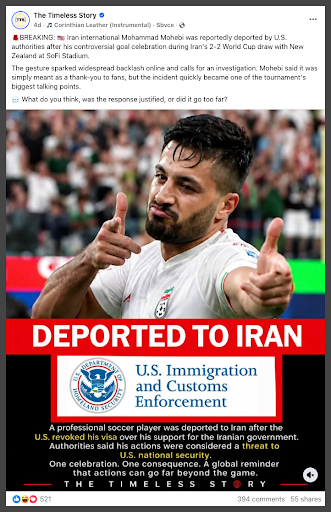
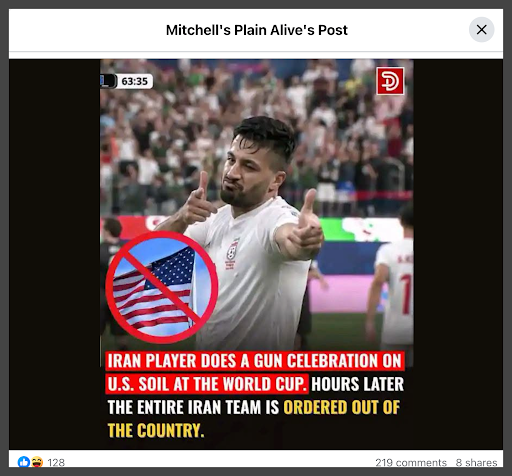
The viral posts typically claim: “Iran’s Mohammad Mohebi has been deported by DHS following his controversial gun gesture celebration after scoring in Iran’s 2-2 World Cup draw against New Zealand.”
Fact Check
DHS Says No Iranian Player Was Deported
The U.S. Department of Homeland Security directly rejected the allegation and described it as a hoax. The agency stated that “no player from the Iranian soccer team has been deported.” (Source)
No announcement regarding Mohebi’s deportation has been issued by DHS, FIFA, U.S. Customs and Border Protection, the Iranian Football Federation, or any major international news organization.
There have been no reports from major sports or news outlets regarding the deportation of any World Cup player.
Mohebi’s Goal Celebration Did Spark Controversy
Video footage confirms the goal celebration occurred as described. During Iran’s 2-2 draw against New Zealand, Mohebi scored and celebrated in a manner that many observers interpreted as a finger-gun gesture. The incident generated criticism online and was widely discussed in media coverage of the match.
However, when questioned about the celebration afterward, Mohebi rejected political interpretations and said it was “just a celebration.” Reports from international media indicate that he did not describe it as a political statement, threat, or reference to violence. (Source)
Therefore, while the controversial gesture is real, there is no evidence connecting it to any immigration enforcement action.
A Real Visa Problem Involved Mehdi Torabi, Not Mohammad Mohebi
The misinformation appears to have been fueled by a separate and genuine visa issue involving another Iranian player, Mehdi Torabi.
Several reputable news organizations reported that Torabi’s U.S. visa expired after Iran’s opening match against New Zealand. According to the Iranian Football Federation, most members of the squad received multiple-entry visas, but Torabi was reportedly issued a single-entry visa that became invalid after the team returned to its temporary base in Mexico.
RTÉ reported that Iranian officials subsequently sought a replacement visa so Torabi could continue participating in the tournament. Reuters likewise reported that Iranian authorities later secured a new visa for Torabi, allowing him to remain available for the team’s upcoming matches.
Importantly, these reports concern Torabi, not Mohebi, and involve visa administration rather than deportation.
Iran’s Delegation Has Faced Broader U.S. Visa Challenges
The visa issue affecting Torabi occurred against a backdrop of broader travel and immigration complications involving Iran’s World Cup delegation.
Before and during the tournament, several Iranian federation officials and support staff reportedly encountered difficulties obtaining U.S. visas. The Associated Press reported that some members of Iran’s delegation were denied entry to the United States, although players and coaches received the visas necessary to participate in the tournament. ESPN also reported that visa restrictions affected certain Iranian officials before the tournament began.
Concurrent reports of genuine visa disputes may have contributed to the circulation of the deportation claim. However, these unrelated travel complications do not provide evidence that Mohebi was deported.
No Evidence Connects the Celebration to Immigration Enforcement
None of the credible reports concerning Iran’s visa issues mention Mohammad Mohebi’s celebration as a factor in any immigration or security decision.
Reporting from Reuters, AP, ESPN and RTÉ consistently indicates that the travel complications involved visa administration, diplomatic tensions, and entry restrictions affecting portions of the Iranian delegation. No outlet has reported that U.S. authorities initiated deportation proceedings against Mohebi because of his on-field conduct.
Conclusion
The claim that Iranian footballer Mohammad Mohebi was deported by the U.S. Department of Homeland Security after his goal celebration against New Zealand is false.
While Mohebi did perform a celebration that some viewers interpreted as a finger-gun gesture, there is no evidence that he was deported or otherwise removed from the tournament. The U.S. Department of Homeland Security stated that “no player from the Iranian soccer team has been deported.” The confusion appears to stem from a separate visa issue involving teammate Mehdi Torabi, whose entry documents briefly expired before being renewed.

Title: No Evidence Iranian Footballer Mohammad Mohebi Was Deported After Goal Celebration at the World Cup
Fact Check By: Pranpreeya
Result: False